20% off £40 or 15% off £30
Shin splints: causes, prevention and treatments

Written byH&B editorial team

Reviewed byHeeral Tomlinson

What are shin splints and how can you avoid them? We talk shin splint treatment, prevention and ways to get a leg up on recovery
Summary
1What are shin splints?
Sometimes called tibial stress syndrome, shin splints are a painful sensation in the front lower leg during exercise.
2What are the symptoms of shin splints?
Common symptoms involve pain in one or both of your shins, in the calf muscle or approximately 5cm across the shin.
3How to prevent shin splints
You can help prevent shin splints by starting a new exercise regime slowly and trying the tips below.
Overtraining, suddenly increasing workouts or wearing shoes way past their best... it’s a recipe for shin splints. Shin splints aren’t any athlete’s idea of fun, but they’re not usually serious when treated properly. Whether you think you’ve got shin splints or you want to avoid them, take a moment to put your feet up and learn from our guide...
What are shin splints?
Shin splints are a painful sensation in the front lower leg during exercise – this pain can be dull, sharp or throbbing and is tender to the touch.1,2 Sometimes referred to as tibial stress syndrome, they happen when your shin bone (tibia) and the surrounding muscles become overloaded.1,2,4 Shin splints are commonly associated with exercise and are often seen in runners or athletes.4 If you ignore the pain and continue exercising the lower leg, shin splint pain tends to increase over a few weeks and may even result in a stress fracture.3,5
What are the symptoms of shin splints?
It can be easy to confuse shin splints with other exercise-related issues like a runner’s knee or calf muscle strain. Some of the most common symptoms associated with shin splints involve pain in one or both of your shins, in the calf muscle or approximately 5cm across the shin (pain in a smaller area may be caused by a stress fracture). This pain may:1,2,3
- start after exercising
- be dull and achy at first
- make the area tender to the touch
- improve with rest
- over time become more constant, both while exercising and resting
If the pain you experience from a shin splint becomes severe and doesn’t seem to be healing on its own, you should speak to your GP or a trained physiotherapist.2
How to prevent shin splints
You can help prevent shin splints by starting a new exercise regime slowly. Gradually build up the intensity of your workouts while also stretching between sessions and prioritising plenty of recovery time.2,3,4 You can also try the following...

1. Don’t skip warm ups or cool downs
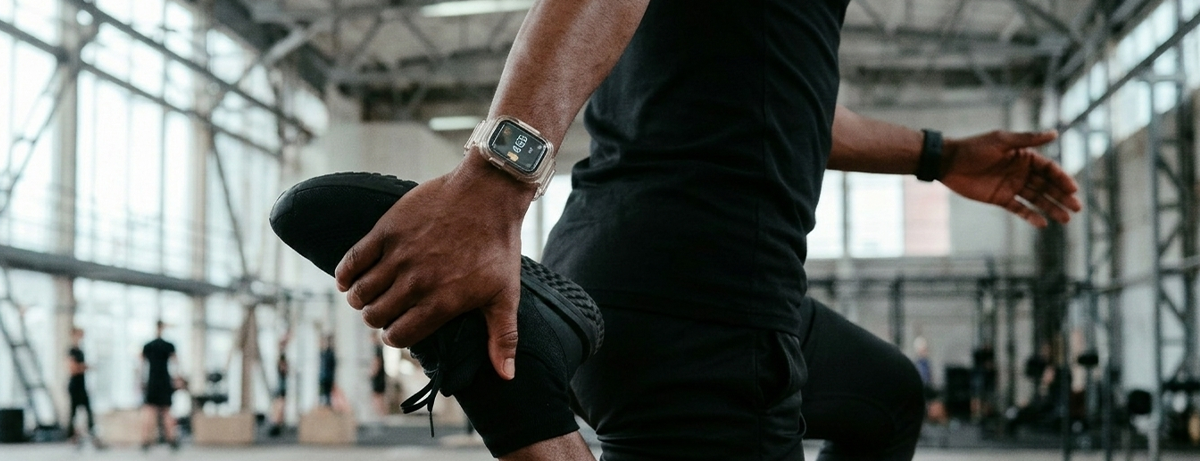
This is the golden rule of exercise: you’re never too busy for a proper warm up or cool down session. To help reduce impact on your feet and legs, choose stretching exercises for your ankles, hamstrings and the front of your calves before and after you do any exercise.
2. Choose supportive shoes
If you’re going to invest in one piece of workout gear, let it be your shoes. A good pair of trainers can massively reduce the stress on your feet and legs while exercising and may play a role in helping stop shin splints.
Wear sports shoes that fit and cushion your feet properly – many sports shops offer free fitting and some have specialised machines that can analyse your gait and pick out a suitable pair for you. If new trainers aren’t in your budget right now, consider wearing cushioned insoles to absorb some of the stress on your feet. Try to replace your shoes when you notice the soles are less able to absorb the impact during running, jumping or playing sports.5
3. Pick the right training ground
The ground you train on can matter, too. If you get a gait analysis in a shoe shop, they’ll usually pick a shoe that suits your terrain. Soft, flat surfaces such as grass or the rubber flooring often found in gyms and outdoor courts, are best for reducing impact on your shins and leg bones. Avoid training on hard surfaces where possible too, such as roads or pavements.
4. Prioritise rest and recovery
It can be tempting to keep going ahead of a big race or in pursuit of a PB. But overtraining is one of the top ways to risk a sports injury. Rest and recovery are just as important as training: advice on recovery differs depending on the circumstance but it’s generally recommended to take at least one rest day per week. Proper recovery also includes things like hydration, adequate sleep and a balanced diet.
Skip intense exercise on days where you feel ill, overtired, you’re in pain or it’s extremely hot. That’s not to say you can’t enjoy gentle movement – take this opportunity to tone down your usual workout, mentor a friend or focus on stretching instead.
5. Try cross training
Cross training involves mixing two or more types of exercise into your routine. It comes with plenty of benefits, from training different muscles and skills to just staving off boredom. But one thing that’s especially helpful is that it reduces repetitive strain, reducing your risk of injuries like repetitive strain injury, bursitis and – you guessed it – shin splints.2,7,8 Runners might substitute one run a week with a weights session, circuits class or a swim, for example. Cross training is extremely versatile and you can make up your own routine, find routines online or ask a personal trainer for advice.
6. Be kind to your body
As well as the tips above, the NHS suggests:2
- using painkillers like paracetamol or ibuprofen to help ease pain during recovery
- applying an ice pack wrapped in a towel to your shin for 20 minutes once every two to three hours
- trying lower-impact exercises like yoga or swimming while your body recovers
- not rushing back into exercise at the level you were previously at
Shin splints FAQs
Shin splints cause pain and tenderness along the front of the lower leg. The pain is usually dull and achy but may become increasingly sharp.9 Shin splints might feel different for everyone, so it’s worth checking with a doctor or a physiotherapist if you’re concerned.
Shin splints may get worse if you continue with your usual exercise. With proper recovery, shin splints should go away within a few weeks.9
It’s best not to run with shin splints as this is a very high-impact exercise. Even if your pain isn’t severe, shin splints can get more serious if you continue your usual activity. If possible, try lower-impact exercises like walking, swimming or yoga during recovery and stop if your shin pain continues.
Shin splints are caused by repeated stress on and around the shin bone. Some factors that may increase your risk of shin splints are running on hard or uneven surfaces, poor footwear, sudden changes in your activity level or insufficient rest time between workouts.2
You should see a doctor if your shin splints are getting more painful or if they aren’t getting better after a few weeks with proper recovery.3,4 You may be able to get physiotherapy on the NHS.
The final say
If you experience a shin splint, it’s important to give yourself enough time to recover properly, by either prioritising lighter exercises or focusing on your upper body instead.2 But if your pain continues or affects day-to-day activities, you should speak to a doctor.
Want to give your body a fighting chance? Learn how to look after your joints before a marathon or shop our top supplement picks for runners...
Disclaimer – This article provides informational advice and is not a substitute for medical care. Working with experts for accuracy, we take great care to ensure the information is up-to-date and relevant. However, you should always consult your GP or healthcare professional before using supplements or alternative products, particularly if you have medical conditions or are under supervision.
1. NHS Lothian. Tibial Stress Syndrome (Shin Splints) [Internet]. NHS Lothian [cited 2026 Jun 15]. Available from: https://apps.nhslothian.scot/refhelp/guidelines/podiatry/msk-podiatry/tibial-stress-syndrome-shin-splints/
2. NHS . Shin splints [Internet]. NHS [reviewed 2023 Feb 9; cited 2026 Jun 15]. Available from: https://www.nhs.uk/conditions/shin-splints/
3. Tyneside Integrated Musculoskeletal Service - NHS. Information for Patients Shin Splints Injury [Internet]. Tyneside NHS [cited 2026 Jun 15]. Available from: https://www.tims.nhs.uk/wp-content/uploads/2020/06/6.17-TIMS-Shin-Splints.pdf
4. Winkelmann ZK, Anderson D, Games KE, Eberman LE. ‘Risk Factors for Medial Tibial Stress Syndrome in Active Individuals: An Evidence-Based Review.’ Journal of Athletic Training [Internet]. 2016 [cited 2026 Jun 15]; 51(12): 1049–52. Available from: https://pubmed.ncbi.nlm.nih.gov/27835043/
5. Oxford University Hospitals – NHS. Department of Sport and Exercise Medicine – Bone Stress Injuries and Stress Fractures Information for patients [Internet]. Oxford University Hospitals [reviewed 2018 Aug; cited 2026 Jun 15]. Available from: https://www.ouh.nhs.uk/patient-guide/leaflets/files/41517Pfractures.pdf.
6. Cornwall MW, McPoil TG. ‘Can runners perceive changes in heel cushioning as the shoe ages with increased mileage?’ International Journal of Sports Physical Therapy [Internet]. 2017 Aug [cited 2026 Jun 15]; 12(4): 616–24. Available from: https://www.ncbi.nlm.nih.gov/pmc/articles/PMC5534152/
7. NHS. Repetitive strain injury (RSI) [Internet]. NHS [reviewed 2026 May 28; cited 2026 Jun 15]. Available from: https://www.nhs.uk/conditions/repetitive-strain-injury-rsi/
8. NHS. Bursitis [Internet]. NHS [reviewed 2023 Oct 30; citeed 2026 Jun 15]. Available from: https://www.nhs.uk/conditions/bursitis/
9. NIDirect.gov. Shin splints [Internet]. NIDirect.gov [cited 2026 Jun 15]. Available from: https://www.nidirect.gov.uk/conditions/shin-splints