20% off £40 or 15% off £30
Could creatine have specific benefits for women? What the science says

Written byLiz Connor

Reviewed byKatie Sanders
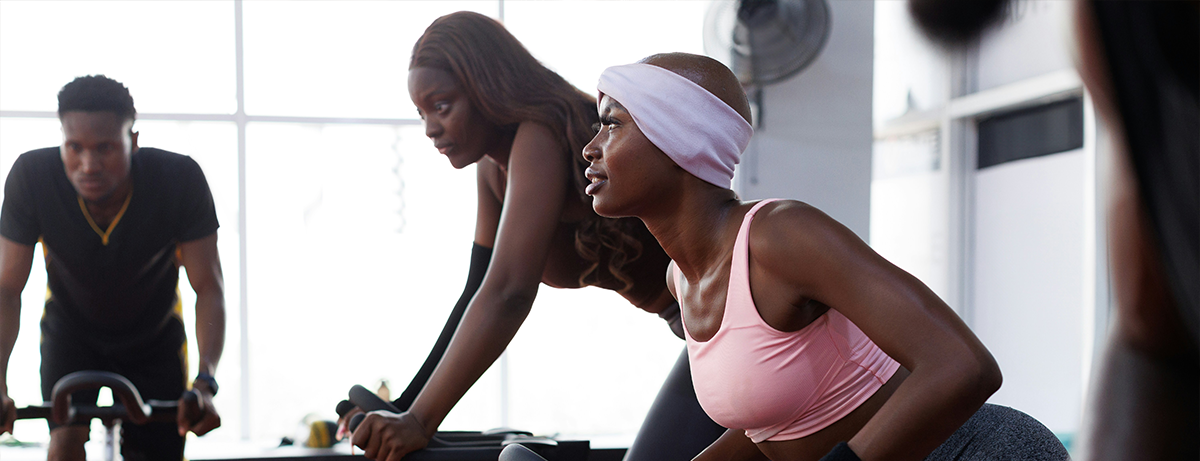
Could creatine support women’s health? From periods to perimenopause, we look at what the science says – with help from a sports scientist and registered dietitian
Summary
1Why are more women taking creatine?
Creatine is now gaining attention among women who are prioritising strength training and curious about how it may support energy and muscle health.
2Are there specific creatine benefits for women?
While research is still emerging, early studies suggest creatine may offer benefits for some women – particularly when combined with resistance.
3Can creatine help during peri and menopause?
Scientists are exploring whether creatine could support strength, muscle and energy during midlife transitions – but the evidence is still evolving.
With 80% of Gen Z gym-goers focused on getting strong, weekly creatine has become a core part of many training schedules.1 Like fibremaxxing and dopamine menus, it’s one of those wellness trends that’s everywhere right now. But as we become more familiar with the supplement, more attention is turning to its specific benefits, including whether it’s actually useful for women.
With wellness jargon everywhere, it can be hard to know what’s genuinely worth your time. So we went straight to the experts, speaking to sports scientist and Doctify-rated dietitian Katie Sanders to unpack what the evidence says so far, what looks promising and where the research is still catching up.
What is creatine and why are more women exploring it?
The reason you’ve likely only just started hearing about creatine is because, for years, it was marketed almost exclusively towards men. But as more women swap cardio for weights and learn about the benefits of supporting muscle health, creatine is edging into the mainstream.
“Creatine is a naturally occurring compound that the body makes itself and that we also get from foods like red meat and fish,” says Katie.
Scientists are particularly interested in it because it plays an “important role in regenerating something called ‘ATP’ – the body’s immediate energy source that fuels us during short, high-intensity activities like resistance training, sprinting or jumping,” she notes.
Are there specific creatine benefits for women?
Creatine has been an area of interest in sports nutrition for ages now, but it’s only recently that we’ve begun to look more closely at how it impacts women’s health. While the evidence is still emerging, Katie says that creatine may offer benefits for some women, particularly if it’s stacked alongside regular resistance training. Let’s take a closer look at the science…
Creatine during your reproductive years
Anyone that struggles with low mood and fatigue in the days running up to their period will know that the late luteal phase is hardly the most energising time of the month.
For those of us hit hard by symptoms, a 2025 review suggested that creatine may help support a more stable mood by improving overall energy levels and aspects of brain health, influencing sleep quality.2 However, the evidence is still developing, and more high-quality studies are needed before firm conclusions can be drawn. Women may have lower overall creatine stores on average compared to men, which has led researchers to explore whether supplementation could play a role, although evidence is still limited.
Creatine during perimenopause and menopause
Interest in creatine is growing among midlife women, as conversations around menopause become less taboo and more women explore ways to support their overall health and strength during this life stage. According to Katie, naturally declining levels of the female sex hormone oestrogen in the months and years before your final period can play a role in:
- a natural loss of muscle mass and muscle tissue 3,4
- less bone density5
- more fatigue6
- problems with memory or concentration (brain fog) 7
“Research suggests that creatine, when combined with resistance training (like lifting weights, Pilates or bodyweight exercises), may help improve strength and support small gains in lean muscle in women before and after menopause,” she reveals.8
In one small study of 15 perimenopausal women, those who took 5 grams of creatine monohydrate a day while strength training twice a week for 14 weeks saw improvements in strength and body composition.9 Some participants even reported improvements in sleep, although this is subjective.
“There isn’t strong enough evidence yet to support creatine as a treatment for cognitive symptoms during menopause,” says Katie. “It’s an interesting area of research, but it’s not proven, and factors like sleep, stress, nutrition and hormonal changes are still important.”

“That said, there’s growing interest in creatine and menopause-related brain fog, largely because of the role it plays in how the brain produces energy,” says Katie. As the brain is an organ that uses up lots of energy, some emerging studies question whether creatine could ‘top up’ its short-term supply, helping us focus when we’re flagging.1
Where is the research lacking?
Despite creatine being one of the most researched supplements in sports nutrition overall, Katie says evidence on women specifically is still lagging behind.
There are some big gaps in what we know because:
- most scientific studies still aren’t done exclusively in women (which is why you’ll hear people talking about something called the ‘gender data gap’)
- we still don’t know enough about how creatine interacts with different phases of the menstrual cycle
- there’s much less research in perimenopausal and menopausal women
- the ‘right’ dose may differ across life stages, but we don’t have clear answers yet
- long-term data in non-athletes is still limited
“When it comes to things like brain fog, the UK Government reviewed the data and said a cause-and-effect relationship between creatine supplementation and improved cognitive function hasn’t yet been established at standard daily doses,” says Katie.
And while creatine is generally safe for most healthy adults, the British Dietetic Association Sports Nutrition Group says more high-quality, female-focused research is needed before we can say anything for sure on its benefits.11
What our expert thinks…
“Based on the current evidence, I think that creatine is a supplement that might offer health benefits for some women, particularly in the context of resistance training and muscle health,” Katie reckons.
“However, I like to think of it as optional, not essential, and remember that the benefits in studies are most consistent when they’re combined with resistance training. Overall, it should always be seen as one part of a broader picture, alongside eating enough protein, consuming a healthy diet, getting enough sleep and prioritising regular movement.
“Viewed this way, it isn’t a shortcut or a ‘fix’ - but simply one option that may have a place in the right context, for the right person, at the right time.”
The final say
We might not have all the answers on creatine just yet, but hopefully you’re a little more clued up on what’s myth and what’s fact. If this has left you wondering about perimenopause and how to spot the signs, read our no-nonsense guide on everything you need to know about this life stage. Or dive deeper into creatine and the brain, where we unpack the myths – and hear from an expert on whether creatine causes weight gain.
Disclaimer - This article provides informational advice and is not a substitute for medical care. Working with experts for accuracy, we take great care to ensure the information is up-to-date and relevant. However, you should always consult your GP or healthcare professional before using supplements or alternative products, particularly if you have medical conditions or are under supervision.
1. Shaping a new era of strength training Consumer Insights on Strength Training in Health, Fitness and Leisure [Internet]. Available from: https://www.ukactive.com/wp-content/uploads/2026/01/Shaping-A-New-Era-of-Strength-Training.pdf
2. Smith-Ryan AE, DelBiondo GM, Brown AF, Kleiner SM, Tran NT, Ellery SJ. Creatine in women’s health: bridging the gap from menstruation through pregnancy to menopause. Journal of the International Society of Sports Nutrition [Internet]. 2025 May 15;22(1). Available from: https://pmc.ncbi.nlm.nih.gov/articles/PMC12086928/
3. Sipilä S, Törmäkangas T, Sillanpää E, Aukee P, Kujala UM, Kovanen V, et al. Muscle and bone mass in middle‐aged women: role of menopausal status and physical activity. Journal of Cachexia, Sarcopenia and Muscle. 2020 Feb 3;11(3):698–709.
4. Menopause -Why do my joints and muscles ache? [Internet]. Available from: https://www.nhsemployers.org/system/files/2022-03/MSK_Menopause%20Leaflet.pdf
5. Charde SH, Joshi A, Raut J. A comprehensive review on postmenopausal osteoporosis in women. Cureus [Internet]. 2023 Nov 9;15(11). Available from: https://pmc.ncbi.nlm.nih.gov/articles/PMC10711335/
6. Davis SR, Pinkerton JV, Santoro N, Simoncini T. Menopause—Biology, consequences, supportive care, and therapeutic options. Cell. 2023 Sep 1;186(19).
7. NHS. Symptoms - Menopause [Internet]. NHS. 2022. Available from: https://www.nhs.uk/conditions/menopause/symptoms/
8. dos Santos EEP, de Araújo RC, Candow DG, Forbes SC, Guijo JA, de Almeida Santana CC, et al. Efficacy of Creatine Supplementation Combined with Resistance Training on Muscle Strength and Muscle Mass in Older Females: A Systematic Review and Meta-Analysis. Nutrients. 2021 Oct 24;13(11):3757.
9. Hall L, Klassen S, Holbein J, Waters J. Impact of creatine supplementation on menopausal women’s body composition, cognition, estrogen, strength, and sleep. Journal of the International Society of Sports Nutrition [Internet]. 2025 Jul 16 [cited 2025 Oct 28];22(sup1). Available from: https://pmc.ncbi.nlm.nih.gov/articles/PMC12291186/
10. Avgerinos KI, Spyrou N, Bougioukas KI, Kapogiannis D. Effects of creatine supplementation on cognitive function of healthy individuals: A systematic review of randomized controlled trials. Experimental Gerontology. 2018 Jul;108:166–73.
11. BDA. SENR Position Statements and Key Documents [Internet]. www.bda.uk.com. Available from: https://www.bda.uk.com/senr-sport-and-exercise-nutrition-register/position-statements.html
Related to this article