20% off £40 or 15% off £30
What are postbiotics? Benefits and 9 postbiotic foods

Written byH&B editorial team

Reviewed byHeeral Tomlinson
Probiotics get all the attention – but postbiotics may be just as important. Let’s break down their benefits and how to get more of them on your plate
Summary
1The difference between pre- and postbiotics
The key differences are their role in gut health and the order they come in.
2What are postbiotics in skincare?
Early research suggests postbiotics may help soothe the skin and support a balanced skin microbiome.
3Potential benefits of postbiotics
One of the benefits is they may support your immune system by helping to calm inflammation.
You’ve likely heard of probiotics – but what about postbiotics? These bacterial ‘waste products’ are far from rubbish – in fact, they’re thought to have benefits from immune function to skin health. Let’s discover what postbiotics are and the easy ways to get plenty into your diet...
What are postbiotics?
While probiotics are the beneficial bacteria that live in your gut, postbiotics are the bioactive compounds probiotics produce after feeding on fibre or prebiotics.1 In the UK, however, 96% of adults and 11–18 year-olds fall short of recommended fibre intakes.1 That matters because without enough fibre, gut bacteria can’t thrive or product beneficial postbiotics. But don't worry, there's plenty of ways to get more fibre in your diet.
What’s the difference between prebiotics and postbiotics?
The key differences are their role in gut health and the order they come in. Prebiotics essentially act as ‘food’ for probiotics, while postbiotics are basically a waste product of this process – but they still have their benefits.1
What are postbiotics in skincare?
Postbiotics (gentle compounds created during the fermentation of beneficial bacteria) are becoming more common in skincare. Early research suggests postbiotics may help soothe the skin and support a balanced skin microbiome, though more research is still needed to fully understand their benefits.
Unlike probiotics (which contain live bacteria), postbiotics use inactive microbes and their byproducts. Some of these byproducts might include short-chain fatty acids (SCFAs) and peptides, which may help support the skin barrier and hydration. If you're wanting these in your skincare products, they'll often be these listed as ‘ferment filtrates’ or ‘lysates’ on ingredient labels. These postbiotics are different from familiar skincare staples like lactic acid or glycerin, which are typically used for exfoliation or moisture rather than classified as postbiotic ingredients.2
What are the potential benefits of postbiotics?
The science behind biotics is still emerging and there’s much more to learn, but here are a few promising areas...
Postbiotics may support the immune system
Postbiotics include short-chain fatty acids, such as butyrate, which are naturally produced when your gut bacteria break down fibre. These may help support immune health by calming inflammation and strengthening the gut lining.3,4 Butyrate also plays a part in renewing the intestinal lining, helping to strengthen the gut barrier and support the body’s natural defences.3 As well as this, certain postbiotics may help support immune balance by influencing the body’s natural immune signals, which help regulate inflammation and tissue repair.3,5,6
Postbiotics may support your gut
In a 2024 study of adults with chronic diarrhoea, taking a postbiotic blend for three weeks was associated with fewer bowel movements and improvements in stool consistency compared with placebo.7
How to get postbiotics in your diet
If you’re interested in getting more postbiotics in your diet, the best way is through food and drinks that are key sources of prebiotics and probiotics. You'll want to look for fermented foods as they may support postbiotic production. While fermented foods don’t directly ‘contain’ postbiotics in the same way supplements might, they provide live bacteria and fermentation by-products that can help nourish your gut microbes and support the natural production of postbiotic compounds. Try adding these to your meals:
- miso – a traditional fermented soybean paste used in soups and dressings8
- live yoghurt – contains active cultures that help feed beneficial gut bacteria
- tempeh – fermented soy with fibre and plant protein that supports the microbiome
- traditional buttermilk – naturally fermented dairy with live cultures (not the kind you'd add to your pancakes)
- unpasteurised sauerkraut – fermented cabbage rich in live bacteria
- kefir – a fermented milk drink that contains different types of microbes and their byproducts9
- fermented pickles – look for ‘brine-fermented’ or ‘live culture’ on the label
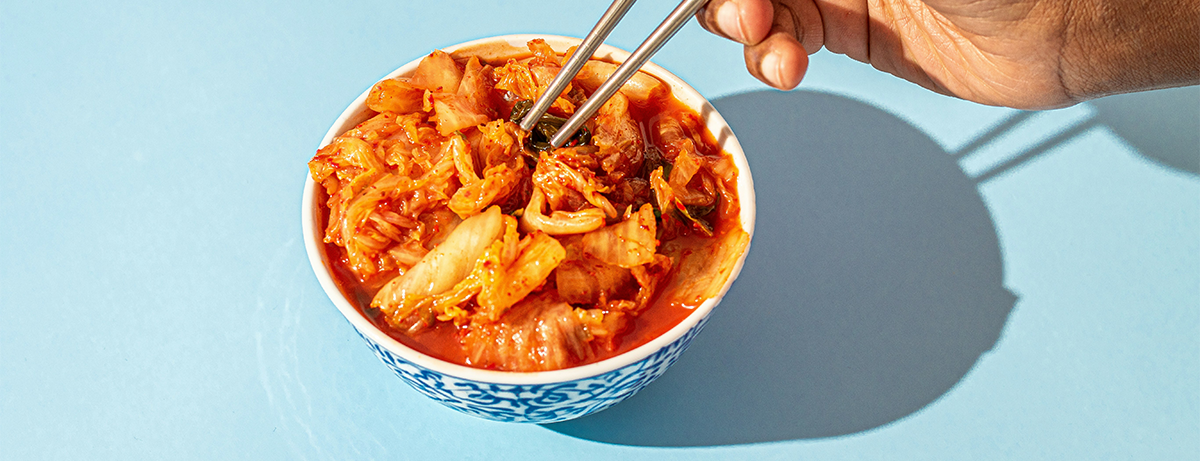
- kimchi – spicy fermented vegetables that may help support microbial diversity10,11
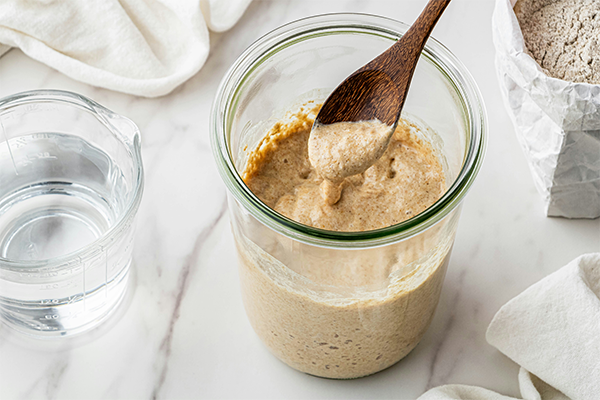
- sourdough bread – although baking kills most microbes, the fermentation process may still make it easier to digest for some people
FAQs
It’s difficult to define the ‘best’ postbiotics as research is still evolving and many aren’t yet widely available as standalone supplements. Getting a variety of fermented foods in your diet may help provide beneficial microbe byproducts and support a healthy gut environment.
The final say
There’s still plenty to learn about postbiotics and the role they may play in our health but early research suggests they could help support gut balance. In the meantime, including a variety of fermented and fibre-rich foods in your diet is a simple, tasty way to support your overall gut health. Just make sure to check with your GP if you’re thinking about taking probiotic supplements. While you wait, check out our ultimate guide to 'good bacteria' or get an expert’s tips on supporting your gut...
Disclaimer – This article provides informational advice and is not a substitute for medical care. Working with experts for accuracy, we take great care to ensure the information is up-to-date and relevant. However, you should always consult your GP or healthcare professional before using supplements or alternative products, particularly if you have medical conditions or are under supervision.
1. Ji J, Jin W, Liu S, Jiao Z, Li X. Probiotics, prebiotics, and postbiotics in health and disease. MedComm (2020) [Internet]. 2023 Nov 4 [cited 2026 Feb 16]; 4(6): e420. Available from: https://pmc.ncbi.nlm.nih.gov/articles/PMC10625129/
2. Draelos ZDD. The role of ‘biotics in skincare. Dermatology Times [Internet]. 2020 Apr 29 [cited 2026 Feb 16]; 41(5). Available from: https://www.dermatologytimes.com/view/role-biotics-skincare
3. Żoɫkiewicz J, Marzec A, Ruszczyński M, Feleszko W. Postbiotics—A Step Beyond Pre- and Probiotics. Nutrients [Internet]. 2020 Jul 22 [cited 2026 Feb 16]; 12(8): 2189. Available from: https://www.mdpi.com/2072-6643/12/8/2189
4. National Cancer Institute (NIH). T Cell [Internet]. NIH [cited 2026 Feb 16]. Available from: https://www.cancer.gov/publications/dictionaries/cancer-terms/def/t-cell
5. Zhao X et al. Unlocking the power of postbiotics: A revolutionary approach to nutrition for humans and animals. Cell Metabolism [Internet]. 2024 Apr 2 [cited 2026 Feb 16]; 36(4): 725-44. Available from: https://www.sciencedirect.com/science/article/pii/S1550413124000834
6. Asefa Z, Belay A, Welelaw E, Haile M. Postbiotics and their biotherapeutic potential for chronic disease and their feature perspective: a review. Microbiomes [Internet]. 2025 Mar 3 [cited 2026 Feb 16]; 4. Available from: https://www.frontiersin.org/journals/microbiomes/articles/10.3389/frmbi.2025.1489339/full
7. Guo S et al. Effects of postbiotics on chronic diarrhea in young adults: a randomized, double-blind, placebo-controlled crossover trial assessing clinical symptoms, gut microbiota, and metabolite profiles. Gut Microbes [Internet]. 2024 Jan-Dec [cited 2026 Feb 16]; 16(1): 2395092. Available from: https://pubmed.ncbi.nlm.nih.gov/39189588/
8. Chang PK, Horn BW, Abe K, Gomi K. ASPERGILLUS | Introduction. Encyclopedia of Food Microbiology (Second Edition) [Internet]. 2014 [cited 2026 Feb 16]; 77-82. Available from: https://www.sciencedirect.com/science/chapter/referencework/abs/pii/B9780123847300000100
9. de Lima Barros SE et al. Potential beneficial effects of kefir and its postbiotic, kefiran, on child food allergy. Food & Function [Internet]. 2021 [cited 2026 Feb 16]; 9. Available from: https://pubs.rsc.org/en/content/articlelanding/2021/fo/d0fo03182h/unauth
10. Citizendium. Lactobacillus kimchii [Internet]. Citizendium [cited 2026 Feb 16]. Available from: https://citizendium.org/wiki/Lactobacillus_kimchii
11. Trakman GL et al. Diet and gut microbiome in gastrointestinal disease. Journal of Gastroenterology and Hepatology [Internet]. 2021 Oct 30 [cited 2026 Feb 16]. Available from: https://onlinelibrary.wiley.com/doi/full/10.1111/jgh.15728
12. Toedter Williams N. Probiotics. Am J Health Syst Pharm [Internet]. 2010 Mar 15 [cited 2026 Feb 16]; 67(6): 449-58. Available from: https://pubmed.ncbi.nlm.nih.gov/20208051/