20% off £40 or 15% off £30



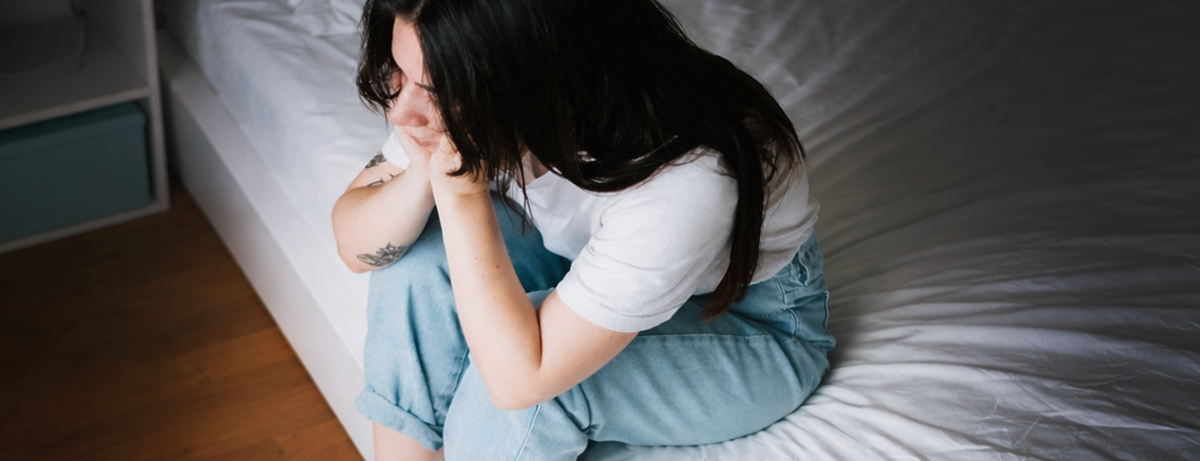
When stress builds up, your body often feels it too. Here’s how anxiety can affect your physical wellbeing – and what you can do to manage it
Summary
1How are stress and anxiety linked?
Whilst they may feel really similar, anxiety and stress are closely related and occasionally coexist but they’re not the same thing.
2Symptoms of stress and anxiety
Stress and anxiety share many similar symptoms, meaning that it can sometimes be tricky to differentiate between the two.
3What causes stress and anxiety?
There are many situations which can make us feel anxious or stressed out. Stress is generally a response to an external cause or situation.
In our fast-paced world, anxiety and stress are all too familiar companions that follow us through life, and unfortunately nobody is immune to their effects. To make things worse, they often come as a package deal, intensifying their influence on our mental well-being.
Here at Holland & Barrett, we believe that understanding the link between stress and anxiety is crucial to developing ways to manage these feelings. So, whether you’re waking up in the night with your heart beating at a million miles an hour or have found yourself more irritable and restless recently, we’ll guide you through understanding your symptoms and how to manage stress and anxiety.
How are stress and anxiety linked?
Whilst they may feel really similar, anxiety and stress are closely related and occasionally coexist but, they’re not the same thing.1 Stress is our body’s response to challenging or threatening situations, which can manifest in a range of physical and emotional symptoms.2 When stress becomes chronic or overwhelming, it can contribute to the development or exacerbation of anxiety.3
Anxiety is defined by feeling persistently and excessively worried. You might feel tense and apprehensive or feel like you’re always anticipating possible danger and future trouble.4 Your body can react by tensing muscles, breathing faster and making your heart beat faster.5
Learning to manage stress through healthy coping mechanisms, such as exercise, relaxation techniques and social support, can be important in learning to prevent or alleviate anxiety symptoms too.6 A bit of anxiety and stress is completely normal, but if you find that it starts to interfere with your day-to-day activities, you should speak to your GP – they’ll be able to offer you tailored advice and support to help with your symptoms.
Symptoms of stress and anxiety
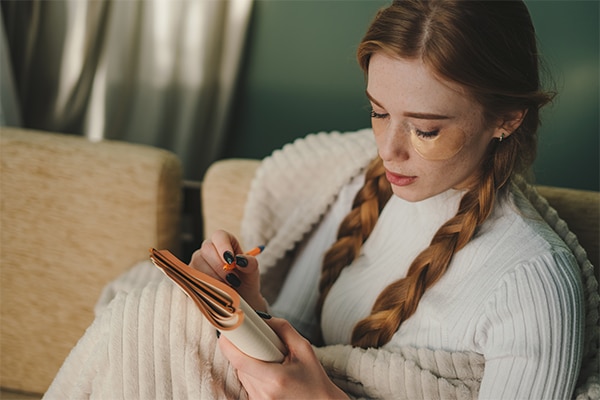
Stress and anxiety share many similar symptoms, meaning that it can sometimes be tricky to differentiate between the two and start to manage these feelings. Both conditions can manifest in various ways, each affecting everyone differently. That said, let's take a look at seven common symptoms of both stress and anxiety.7
Feeling apprehensive and restless is common when you’re feeling stressed and can happen if you have anxiety.
Feeling under pressure or strained happens during times of stress (it can even be a trigger for stress) and you can feel the same way if you have anxiety.
Having negative thoughts or feeling worried all the time is really common with anxiety but can happen during periods of stress too.
Feeling tense from stress or worried from anxiety can leave your head feeling sore and achy, so you might find you have more headaches than usual.
Both stress and anxiety can cause your muscles to tense up, which can leave you feeling achy and fatigued.
Anxiety and stress can leave your body in a 'fight or flight' state, making it difficult for you to fall asleep.8 You might find yourself overthinking and worrying at night too.
Stressful situations and anxious episodes can both cause a spike in your blood pressure.9
In addition, there are symptoms related specifically to stress and others which relate specifically to anxiety. Stress symptoms can also include dizziness, digestive issues, irritability, increased sweating, restlessness and changes in your appetite.2 Anxiety can also cause tingling or numbness, brain fog and a feeling of impending doom.10
What causes stress and anxiety?
There are many situations which can make us feel anxious or stressed out. Stress is generally a response to an external cause or situation. The NHS states that the four most common causes of stress include work, financial problems, relationships and health worries but once resolved, those feelings of stress usually go away.2
Anxiety, on the other hand, is more difficult to pinpoint the exact cause. It’s thought that anxiety could occur due to a combination of factors like:
- genetics: some research suggests that anxiety disorders can run in families, which highlights a potential genetic predisposition11
- brain chemistry: it’s thought that an imbalance in brain chemicals like serotonin, may play a role in developing anxiety12,13
- life experiences: major life changes and stressful or traumatic events can make developing anxiety more likely14,15
- medical conditions: it’s thought that some medical conditions, like those that cause chronic pain, can contribute to anxiety16
In some cases, frequent and overwhelming feelings of stress and anxiety could be a sign of an underlying condition like generalised anxiety disorder (GAD), panic disorder, post-traumatic stress disorder (PTSD), social anxiety disorder or obsessive-compulsive disorder (OCD).17
It’s so important to speak to your GP or a mental health professional if your feelings of stress and anxiety begin to affect your day-to-day life.
Can stress cause anxiety?
In some cases, stress can cause anxiety. This is particularly true if you experience a lot of stress over a long period of time or experience a stressful and traumatic event when you’re young.17
How to reduce stress and anxiety
Learning how to manage stress and anxiety is so important. Everyone is different, so it might take some trial and error to figure out what works for you when it comes to anxiety and stress relief. Here are some things you can try when you feel overwhelmed:18,19
Physical activity is a well-known stress reliever, whether you choose to go for a run, do some yoga or just go for a stroll round the block. It's especially important to spend time in nature.
Eating a balanced diet with plenty of fruits, vegetables, fibre and whole grains can help improve your mood.
Aiming for seven to eight hours of sleep and making sure you’re well rested can help you handle your stress better.
Both caffeine and alcohol can make stress and anxiety worse, so it’s a good idea to cut back or even cut them out completely. Try swapping alcohol for mocktails and caffeine for herbal tea.
Practising mindfulness and meditation allows you to learn to focus on the present, reduce stress and improve your focus.
Taking slow, deep breaths helps to activate your body’s relaxation response.
Challenge your negative thoughts and practice positive affirmations and self-talk.
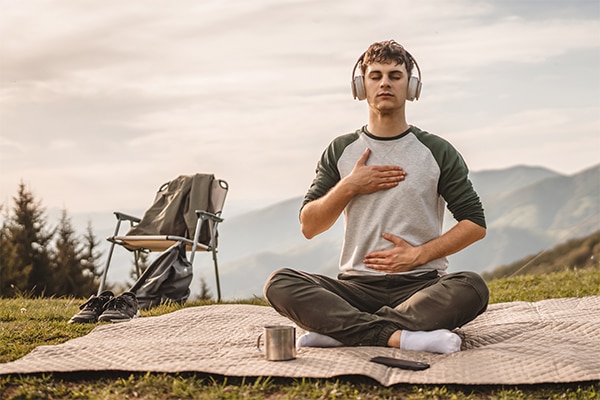
Perhaps most important, you need to be kind to yourself and listen to your body. Everyone has difficult days and there’s nothing wrong with sitting on the sofa, eating snacks and watching a good film to make you feel better.
If you're struggling to manage stress and anxiety on your own, speak to a medical professional. A therapist or GP can teach you additional coping techniques and can even help you develop a plan to manage your anxiety and stress.
The final say
Anxiety and stress are closely linked but are actually two very different things. As such, it can be hard to tell the difference between the two but learning the signs and symptoms of both is a great first step to tackling how you feel.
There are lots of stress management techniques that can help you cope with your feelings, from meditation to exercise and more. But it’s always important to remember to speak to a medical professional if your stress or anxiety begins to affect your everyday life.
Learn more about how can stress affect your gut and what your vagus nerve is with science-backed ways to manage stress.
Disclaimer – This article provides informational advice and is not a substitute for medical care. Working with experts for accuracy, we take great care to ensure the information is up-to-date and relevant. However, you should always consult your GP or healthcare professional before using supplements or alternative products, particularly if you have medical conditions or are under supervision.
1. the W. What’s the difference between stress and anxiety? [Internet]. https://www.apa.org. 2019 [cited 2023 Nov 16]. Available from: https://www.apa.org/topics/stress/anxiety-difference
2. NHS Choices. Stress [Internet]. 2023 [cited 2023 Nov 16]. Available from: https://www.nhs.uk/mental-health/feelings-symptoms-behaviours/feelings-and-symptoms/stress/
3. Khan S, Khan R. Annals of Psychiatry and Mental Health Cite this article. Ann Psychiatry Ment Health [Internet]. 2017;5(1):1091. Available from: https://www.jscimedcentral.com/public/assets/articles/psychiatry-5-1091.pdf
4. NHS Choices. Anxiety, fear and panic [Internet]. 2023 [cited 2023 Nov 16]. Available from: https://www.nhs.uk/mental-health/feelings-symptoms-behaviours/feelings-and-symptoms/anxiety-fear-panic/
5. APA. APA Dictionary of Psychology [Internet]. Apa.org. 2023 [cited 2023 Nov 16]. Available from: https://dictionary.apa.org/anxiety?_gl=1*1mkawdk*_ga*ODk3NTczNDg1LjE3MDAxMjk4MzY.*_ga_SZXLGDJGNB*MTcwMDEyOTgzOS4xLjEuMTcwMDEyOTk1Ni4wLjAuMA
6. Mind and Body Approaches for Stress and Anxiety: What the Science Says [Internet]. NCCIH. NCCIH; 2020 [cited 2023 Nov 16]. Available from: https://www.nccih.nih.gov/health/providers/digest/mind-and-body-approaches-for-stress-science
7. I’m So Stressed Out! Fact Sheet [Internet]. National Institute of Mental Health (NIMH). 2024 [cited 2024 Mar 6]. Available from: https://www.nimh.nih.gov/health/publications/so-stressed-out-fact-sheet
8. WPA. How to break the cycle of anxiety and poor sleep [Internet]. Wpa.org.uk. WPA; 2022 [cited 2024 Mar 11]. Available from: https://www.wpa.org.uk/health-wellbeing/articles/anxiety-poor-sleep
9. Stress. Stress [Internet]. British Heart Foundation. 2023 [cited 2024 Mar 11]. Available from: https://www.bhf.org.uk/informationsupport/risk-factors/stress
10. NHS Choices. Symptoms - Generalised anxiety disorder in adults [Internet]. 2024 [cited 2024 Mar 11]. Available from: https://www.nhs.uk/mental-health/conditions/generalised-anxiety-disorder/symptoms/
11. Gottschalk MG, Domschke K. Genetics of generalized anxiety disorder and related traits. Dialogues in Clinical Neuroscience [Internet]. 2017 Jun 30 [cited 2024 Mar 11];19(2):159–68. Available from: https://www.ncbi.nlm.nih.gov/pmc/articles/PMC5573560/
12. Role of different neurotransmitters in anxiety: a systemic review | international journal of pharmaceutical sciences and research [internet]. International journal of pharmaceutical Sciences and Research | IJPSR. 2017 [cited 2024 Mar 11]. Available from: https://ijpsr.com/bft-article/role-of-different-neurotransmitters-in-anxiety-a-systemic-review/?view=fulltext
13. Nuria Daviu, Bruchas MR, Moghaddam B, Sandi C, Beyeler A. Neurobiological links between stress and anxiety. Neurobiology of Stress [Internet]. 2019 Nov 1 [cited 2024 Mar 11];11:100191–1. Available from: https://www.sciencedirect.com/science/article/pii/S2352289519300438#sec/
14. NHS Choices. Life changes [Internet]. 2024 [cited 2024 Mar 11]. Available from: https://www.nhs.uk/every-mind-matters/lifes-challenges/life-changes/
15. Effects of trauma [Internet]. Mind.org.uk. 2023 [cited 2024 Mar 11]. Available from: https://www.mind.org.uk/information-support/types-of-mental-health-problems/trauma/effects-of-trauma/
16. What causes anxiety problems [Internet]. Mind.org.uk. 2021 [cited 2024 Mar 11]. Available from: https://www.mind.org.uk/information-support/types-of-mental-health-problems/anxiety-and-panic-attacks/causes/
17. NHS Choices. Signs of an anxiety disorder [Internet]. 2024 [cited 2024 Mar 11]. Available from: https://www.nhs.uk/mental-health/feelings-symptoms-behaviours/feelings-and-symptoms/anxiety-disorder-signs/
18. NHS Choices. 10 stress busters [Internet]. 2024 [cited 2024 Mar 11]. Available from: https://www.nhs.uk/mental-health/self-help/guides-tools-and-activities/tips-to-reduce-stress/
19. How to manage and reduce stress [Internet]. Mental Health Foundation. 2022 [cited 2024 Mar 11]. Available from: https://www.mentalhealth.org.uk/explore-mental-health/publications/how-manage-and-reduce-stress