20% off £40 or 15% off £30
Are pecan nuts good for you? We explain the benefits

Written byEmily Coates

Reviewed byMadalena Vieira Costa

Pecans aren’t just for pies – these naturally sweet, crunchy nuts are packed with nutrients and potential benefits, so we asked a nutritionist what they’re good for and how to add them to your day
Our top picks
High in fibre and magnesium
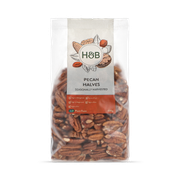
Holland & Barrett
Holland & Barrett Pecan Halves 400g
3 For 2 Mix & Match
£12.49
With banana pieces and maple almonds
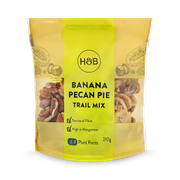
Holland & Barrett
Holland & Barrett Banana Pecan Pie Trail Mix 210g
Buy 1 Get 1 Half Price
£4.99
Pecans, almonds, cashews and hazelnuts
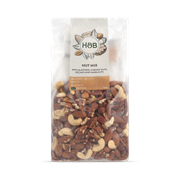
Holland & Barrett
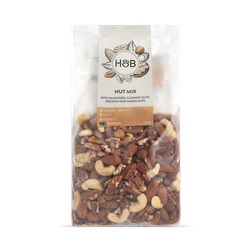
Holland & Barrett Nut Mix 850g
3 For 2 Mix & Match
£16.49
Pecans have long been cast as the star of sweet treats, but they’re stepping beyond the baking aisle and into their own. As other nuts take a turn in the spotlight (hello, pistachios), pecans are getting recognition for their rich flavour, versatility and nutritional value. From everyday wellbeing to easy snacking, pecans have a lot to offer beyond their dessert credentials – but what does the science actually say?
“Pecans are nutrient-dense and provide several key components linked to health benefits, including monounsaturated fats and antioxidants,” explains H&B nutritionist Madalena Vieira Costa, and these compounds are widely studied for their role in supporting heart health and protecting the body from oxidative stress.1
While research is still evolving in some areas, pecans can be a valuable addition to a balanced diet when eaten regularly and in moderation, so it’s worth taking a closer look at what’s behind their growing popularity.
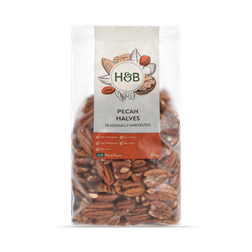
Holland & Barrett
£12.49
£3.12/100 g
Are pecans good for you?
They’re naturally rich in monounsaturated fats, the type of fat often associated with heart health, as well as antioxidants like polyphenols and vitamin E. Together, these nutrients help protect cells from oxidative stress – a process linked to long-term health conditions.¹
“Pecans are particularly beneficial for heart health due to their high content of monounsaturated fats and polyunsaturated fatty acids, along with their rich antioxidant profile,” says Madalena. She adds that these antioxidants help protect the body from oxidative stress and reduce lipid oxidation.”1
Pecans are rich in unsaturated fats, and including nuts such as pecans as part of a balanced diet may help support healthy cholesterol levels. This is in line with advice from organisations including the NHS and HEART UK, which recommend eating more unsalted nuts as part of a heart-healthy eating pattern.2-3
The nutritional value of a pecan
Pecans are considered a nutrient-dense food, meaning they provide a range of beneficial nutrients in a relatively small portion, making them a convenient addition to everyday meals and snacks.
A typical 30g handful of pecans contains:
“They also contain fibre, although direct effects on gut health are still being researched,” says Madalena, adding that these minerals help support overall body function and play a role in processes like energy production and metabolism.
While they’re relatively high in fat, most of this comes from unsaturated fats, which are generally considered more beneficial for heart health when eaten in place of saturated fats.
What are the health benefits of pecans?
- May support heart health
The strongest evidence around pecans centres on heart health, which is largely linked to their fat profile and antioxidant content working together.
Their high content of monounsaturated fats, alongside antioxidants like polyphenols and vitamin E, may help support heart health by helping to protect fats in the blood from oxidative damage over time.¹ Compared to many other nuts, pecans are also thought to have a particularly high antioxidant capacity, which may further contribute to their protective effects when included as part of a balanced diet.1,5 - May help support healthy cholesterol levels
Closely linked to heart health, pecans may help support healthy cholesterol levels, particularly when they're eaten as part of a balanced diet and used to replace foods higher in saturated fat.
"The NHS and HEART UK recommend including unsalted nuts as part of a heart-healthy diet, as they contain unsaturated fats and may help lower cholesterol," explains Madalena.2-3 As a type of tree nut, pecans are a source of unsaturated fats, making them a nutritious addition to a balanced diet. While the research is encouraging, pecans aren't a quick fix, and any potential benefits are best seen as part of an overall healthy eating pattern and lifestyle. - A source of fibre for digestive health
Pecans contain fibre, a nutrient that many people in the UK don't get enough of. According to Guts UK, around 96% of UK adults don't meet the recommended daily fibre intake, despite fibre playing an important role in supporting digestive health.6
"Adding fibre-rich foods such as pecans to a balanced diet can help increase your daily fibre goals," says Madalena. Adults should aim for around 30g of fibre a day, which can be achieved by eating a variety of fibre-rich foods, including nuts, fruit, vegetables, pulses and wholegrains.6 - Contains energy-supporting nutrients
Pecans contain nutrients that contribute to energy, including copper and manganese, making them a nutritious addition to a balanced diet. They also provide plant protein, healthy fats and fibre.4
"A small handful of unsalted nuts each day can make a satisfying snack as part of a healthy, balanced diet," says Madalena. This is in line with guidance from Heart UK, which recommends including nuts as part of a heart-healthy eating pattern.3 Pecans can be enjoyed on their own or added to meals such as porridge, yoghurt or salads.
What are pecan nuts good for?
Pecans can be a useful addition to your diet if you’re looking to support a range of everyday health goals, particularly when included as part of a balanced way of eating.
They may help support:
- heart health
- healthy cholesterol levels
- digestive health
- steady energy levels
How many pecans should you eat a day (and how to eat them)
Research typically looks at serving sizes of around a handful (about 30g) of pecans per day as part of a balanced diet, which can easily be incorporated into meals or snacks.7
“They can be added to breakfast cereals, porridge or yoghurt, sprinkled over salads, or used in baking,” says Madalena, highlighting just how versatile they can be in everyday eating. If you’re looking for an easy way to include them, try adding pecans to:
- morning porridge or overnight oats
- yoghurt bowls
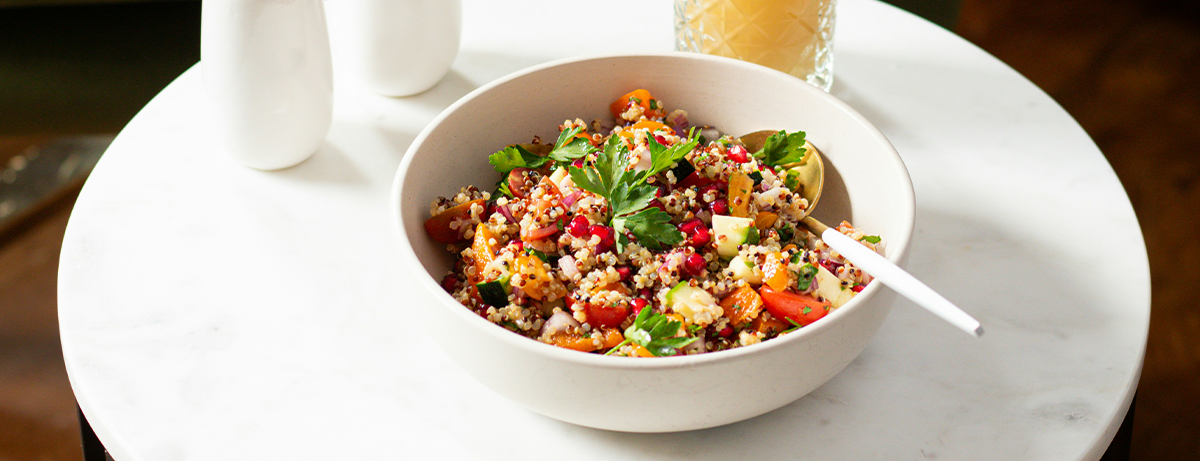
- salads or grain bowls
- homemade snacks
You could also try recipes like our banana and pecan energy balls, which offer a simple way to combine pecans with other nutrient-dense ingredients for a balanced, on-the-go bite.
Who should avoid pecans?
If you have a tree nut allergy, it’s very important to avoid pecans, as they can trigger allergic reactions that range from mild to severe depending on the individual. Symptoms may include itching, swelling, digestive discomfort or more serious reactions. While cross-reactivity between tree nuts can be common, not everyone with a tree nut allergy is allergic to every type of nut. If you’re unsure whether pecans are suitable for you, it’s always best to seek advice from a healthcare professional.8
The final say
Pecans might not always be the first nut you reach for, but they offer a strong nutritional profile and some well-supported benefits, particularly when it comes to heart health and supporting more balanced energy levels throughout the day. So if you’re after an easy upgrade to your daily snacks, adding a handful of pecans to your diet can be a simple way to support overall health, whether you’re sprinkling them over breakfast or sneaking them into your office bag.
If you’re looking to support your heart health further, explore our guide to heart health supplements, or for more on smart snacking ideas, take a look at the high-protein snacks you need in your bag.
Pecan FAQs
Pecans, walnuts and almonds are all nutrient-dense nuts, but they each have slightly different nutritional profiles. Pecans are particularly rich in monounsaturated fats and antioxidants, while walnuts are known for their omega-3 fatty acid content and almonds provide more protein and vitamin E. Rather than choosing one "healthiest" nut, eating a variety of unsalted nuts can help you benefit from the different nutrients they provide.1
Yes, for most people, enjoying a small handful (around 30g) of unsalted pecans each day can be part of a healthy, balanced diet. Like other nuts, pecans are energy-dense, so it's worth sticking to sensible portion sizes and eating them as part of a varied diet rather than in addition to other high-calorie snacks.7
Because pecans are naturally high in unsaturated fats, they can become rancid if stored incorrectly. Keep them in an airtight container in a cool, dark cupboard if you'll use them within a few weeks, or store them in the fridge or freezer to help keep them fresher for longer.4
Disclaimer – This article provides informational advice and is not a substitute for medical care. Working with experts for accuracy, we take great care to ensure the information is up-to-date and relevant. However, you should always consult your GP or healthcare professional before using supplements or alternative products, particularly if you have medical conditions or are under supervision.
1. Guasch-Ferré M, Li J, Hu FB, et al. Nut consumption and cardiovascular health. Nutrients. 2023;15(11):2486. Available from: https://pmc.ncbi.nlm.nih.gov/articles/PMC10255614/
2. NHS. High cholesterol – How to lower your cholesterol [Internet]. NHS; 2026 [cited 2026 Jun 25]. Available from: https://www.nhs.uk/conditions/high-cholesterol/how-to-lower-your-cholesterol/
3. HEART UK. Cholesterol-busters: Nuts [Internet]. HEART UK; [cited 2026 Jun 25]. Available from: https://www.heartuk.org.uk/step-4-eat-and-live-smart/cholesterol-smart-nuts
4. US Department of Agriculture. FoodData Central: Pecans [Internet]. U.S. Department of Agriculture; [cited 2026 Jun 25]. Available from: https://fdc.nal.usda.gov/
5. Bolling BW, Chen CYO, McKay DL, Blumberg JB. Tree nut phytochemicals: composition, antioxidant capacity, bioactivity, impact factors. Nutr Rev. 2021;79(8):872-902. Available from: https://pmc.ncbi.nlm.nih.gov/articles/PMC8181712/
6. Guts UK. Fibre [Internet]. Guts UK; [cited 2026 Jun 25]. Available from: https://gutscharity.org.uk/advice-and-information/health-and-lifestyle/fibre-information/
7. Brown R, Gray AR, Chua MG, Ware L, Chisholm A, Tey SL. Is a handful an effective way to guide nut recommendations? Int J Environ Res Public Health. 2021;18(15):7812. doi:10.3390/ijerph18157812. Available from: https://pmc.ncbi.nlm.nih.gov/articles/PMC8345392/
8. American Academy of Allergy, Asthma & Immunology. Tree nut allergy [Internet]. AAAAI; [cited 2026 Jun 25]. Available from: https://www.aaaai.org/tools-for-the-public/conditions-library/allergies/tree-nut-allergy
Related to this article