20% off £40 or 15% off £30


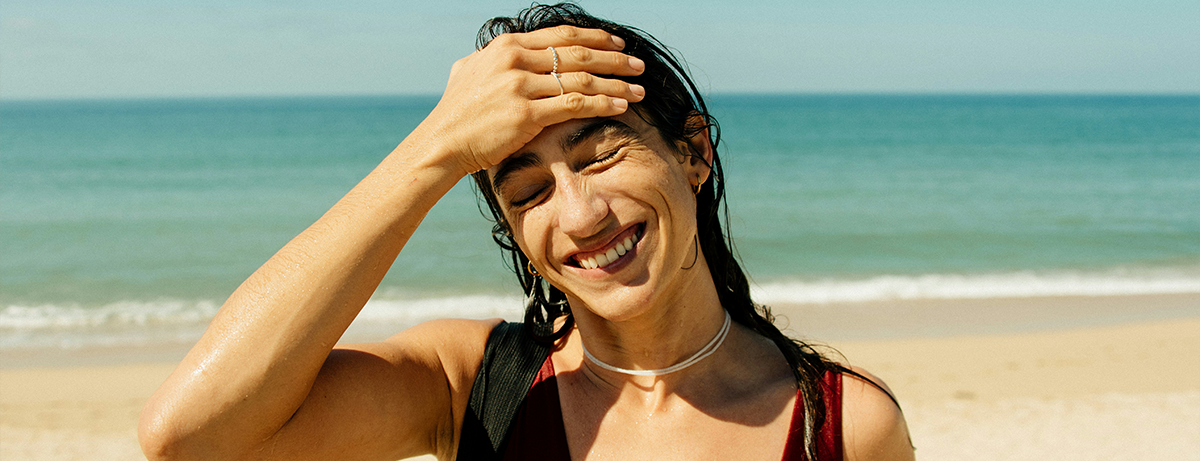
Nothing makes us feel happier, healthier and more centred than a trip away – but how do you hold onto that blissful feeling when you’re back at your desk?
Summary
1Why holidays make you happier
From lower stress levels to more time outdoors, a holiday is a chance to step back from the demands of everyday life.
2The holiday lifestyle effect
More movement, better meals and less screen time. These subtle habit shifts we make on holiday can have a big impact on how we feel.
3Bring the feeling home
You don't need a plane ticket to feel good. Look at trying to duplicate these habits back at home.
Ever feel like you're a happier person on holiday? Like you’re a lighter and freer version of yourself? Then, as soon as you step off the plane and return to your normal routine, reality comes crashing back in, with overflowing inboxes, miserable grey skies and the daily commute all conspiring to kill your vibe.
Yep, there’s no denying that the post-holiday blues are real, but there's also no reason why you can't hold onto that feeling for a little longer.
That’s why we spoke to Kerri Mee, a BABCP accredited psychotherapist at Onebright, at why time away from our usual routines feels so good, why the slump hits so hard and what you can do to bring more of that vacay energy into your everyday life.
Why do I feel better on holiday?
From lingering over long lunches and genuinely connecting with the people around you, to the constant dopamine hit of being in a new environment, there are plenty of reasons why travel feels good for body and soul. "A holiday is a chance to step back from the demands of everyday life," explains Kerri. “For many of us, time away means finally coming out of survival mode, where stress levels drop, screen time falls dramatically and we actually make time to catch up on missed sleep."
We also tend to spend more time outdoors when we’re away, skiing down slopes, hiking to vantage points or simply flopping down on a deckchair. "Studies suggest that just 20 minutes in nature can make a significant difference to your mental health, with natural sunlight helping to reset your circadian rhythm (aka, the body's natural sleep-wake cycle) while increasing levels of mood-supporting vitamin D.”1-3
The ‘holiday lifestyle’ effect
From your diet to your exercise levels, being on holiday can make subtle but healthy tweaks to your lifestyle. You may notice you adopt some of the following…
- mediterranean-style eating patterns: holidays often mean more oily fish, colourful veggies, healthy glugs of olive oil and leisurely mealtimes
- outdoor living: from a morning walk to the local market to an afternoon on the beach, time away naturally pulls us out into nature
- reduced screen time: with less reason to be glued to your phone or laptop, your brain finally gets a chance to switch off and reset
- circadian rhythm support: rising and sleeping with the sun (particularly in sunnier climates) helps get your body clock back in sync, which has a knock-on effect on your sleep quality and your energy levels4
- movement naturally built into the day: whether exploring a new city on foot or swimming, cycling or hiking outdoors, movement on holiday can quickly add up
Why does food taste better on holiday?
Call it the sunshine effect, but being away lowers levels of the stress hormone cortisol, which research suggests can noticeably sharpen your sensory sensitivity, causing you to taste foods more acutely.5 The brain's reward centre also appears to light up and activate when we’re trying novel and highly rewarding new foods, releasing the feel-good transmitter dopamine that can make the experience of eating feel more exciting.
Plus, many holiday hotspots, like the Mediterranean countries, rely on hyper-local, seasonal produce that’s freshly picked and packed with healthy nutrients that taste great, as opposed to heavily ultra-processed packaged foods or bio-engineered supermarket produce.
How to bring the ‘holiday feeling’ home
Just got back from a restorative break? Here’s how to keep things fun, even when regular life feels slightly flat and mundane.
Sign up to a fitness club
“Loneliness is something that can have a huge impact on our mental and physical health,” says Kerri.6 “While any form of exercise is good for us, bringing in a social element gives us an extra wellbeing boost.” You could try joining a local walking group, starting a padel club or finding a friendly run club in your area.
Utilise screen-time limits
Most phones now come with built-in wellbeing features that let you set hard limits on social media apps. "If you're likely to override them, try physically putting your phone in a drawer for a couple of hours in the evening so you can focus on hobbies instead," Kerri says.
Seek out novelty closer to home
Holidays feel nourishing because we’re constantly discovering new things. "Could you bring that same sense of novelty into your local area?" asks Kerri. "Are there parks or outdoor spaces you haven't explored or activities you've never tried? Trying new things closer to home can give you that missing boost in serotonin and endorphins."
Support your circadian rhythm with natural light
On holiday, we're often outside far more than usual, soaking up the sun’s benefits. "Even if it's just 10 minutes standing in the garden with a hot drink in the morning, getting some natural daylight will help you to feel more energised through the day," Kerri notes.7
Romanticise your routines
Even the most mundane tasks give us a sense of main character energy on holiday, like a morning coffee at the local cafe, a slow walk to the shops or a chat with someone unexpected while out and about. “Try bringing that same appreciation to your everyday rituals at home," suggests Kerri.
Book a micro-holiday
If you've already maxed out your annual leave, there are ways to tap into a sense of adventure, right on your doorstep. "Even exploring somewhere new in your local area can give your brain the reset it's craving," says Kerri. "You don’t necessarily have to go far."
Take slower meals
Studies suggest that eating at a slow pace gives your gut hormones enough time to signal fullness to your brain, so you avoid that uncomfortable overfull feeling after lunch.8 "Try batch cooking healthy meals if you're too busy to get in the kitchen every day," Kerri adds.
Being on holiday FAQs
A combination of factors work together to lift your mood when you're away. These are lower stress levels, more time outdoors, increased social connection, better sleep, more movement and the dopamine boost of new experiences.
Largely, it’s because your stress levels are lower and your body clock gets a chance to reset. Spending more time in the sun or natural daylight helps regulate your circadian rhythm, which makes it easier to fall asleep and stay asleep.
The final say
Whether you're a sucker for exploring new cities or you prefer to laze by the pool with a good book, time to slow down from the daily rush can be a natural recharge, but as Kerri reminds us: “It’s not necessarily the holiday that feels good, but the healthy habits we adopt when we’re away.”
Dive deeper into the benefits of nature and how time outdoors supports your mental and physical health. Jetting off soon? Make sure to check out our guide to the beauty must-haves that are sun, sea and suitcase approved.
Disclaimer – This article provides informational advice and is not a substitute for medical care. Working with experts for accuracy, we take great care to ensure the information is up-to-date and relevant. However, you should always consult your GP or healthcare professional before using supplements or alternative products, particularly if you have medical conditions or are under supervision.
1. Hunter MRF, Gillespie BW, Chen SYP. Urban nature experiences reduce stress in the context of daily life based on salivary biomarkers. Front Psychol. 2019;10:722. doi:10.3389/fpsyg.2019.00722.
2. Menezes-Júnior LAA, Sabião TS, Carraro JCC, Machado-Coelho GLL, Meireles AL. The role of sunlight in sleep regulation: analysis of morning, evening and late exposure. Sleep Sci. 2024;17(Spec 1):e441. doi:10.1055/s-0044-1791531.
3. Penckofer S, Kouba J, Byrn M, Ferrans CE. Vitamin D and depression: where is all the sunshine? Issues Ment Health Nurs. 2010;31(6):385-393. doi:10.3109/01612840903437657.
4. Desai D, Momin A, Hirpara P, Jha H, Thaker R, Patel J. Exploring the role of circadian rhythms in sleep and recovery: a review article. Cureus. 2024;16(5):e59872. doi:10.7759/cureus.59872.
5. al'Absi M, Nakajima M, Hooker S, Wittmers L, Cragin T. Exposure to acute stress is associated with attenuated sweet taste. Psychophysiology. 2012;49(1):96-103. doi:10.1111/j.1469-8986.2011.01289.x.
6. Mushtaq R, Shoib S, Shah T, Mushtaq S. Relationship between loneliness, psychiatric disorders and physical health? A review on the psychological aspects of loneliness. J Clin Diagn Res. 2014;8(9):WE01-WE04. doi:10.7860/JCDR/2014/10077.4828
7. Mead MN. Benefits of sunlight: a bright spot for human health. Environ Health Perspect. 2008;116(4):A160-A167. doi:10.1289/ehp.116-a160.
8. Hawton K, Ferriday D, Rogers P, Toner P, Brooks J, Holly J, et al. Slow down: behavioural and physiological effects of reducing eating rate. Nutrients. 2018;11(1):50. doi:10.3390/nu11010050.