20% off £40 or 15% off £30
Echinacea explained: what you need to know about this herb
Written byNatalie Beastall

Reviewed byHeeral Tomlinson

From a traditional remedy to a modern wellness favourite, echinacea has earned its place in the herbal hall of fame. So, how do you use it safely and what does the latest research say?
Summary
1What is echinacea?
It’s a wild herb native to the plains of North America. There are three types used in herbal medicines: purpurea, pallida and angustifolia.
2The benefits of echinacea
Potential benefits have long been discussed but today it’s most commonly based on traditional use only to help relieve symptoms of the common cold.
3What does science say?
Research into echinacea has been going on for decades, but so far, the results have been mixed. This means the jury’s still out on the science.
Loved for its vibrant purple petals and centuries of use in natural health traditions, this prairie flower has become a go-to for those who like to take a more holistic approach to wellbeing – whether that’s through herbal teas, supplements or skincare. But what does modern science say about it? We spoke to Biomedical Science Expert, Heeral Tomlinson, to see whether echinacea lives up to the hype or if more research is needed.
What is echinacea?
Echinacea, also known as American coneflower, is a wild herb native to the plains of North America. The three types of echinacea used in herbal medicines are echinacea purpurea, echinacea pallida and echinacea angustifolia. The herb most widely used is echinacea purpurea and is available as a tea, tablets, liquid or ointment.1
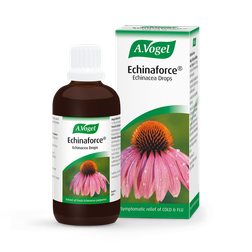
A.Vogel
£23.99
£23.99/100 ml
The best approach when taking these products is to follow the directions on the label and speak with a healthcare professional or qualified herbalist if you’re unsure.
What are the benefits of echinacea?
Echinacea potential benefits have long been discussed as it’s been used as a traditional herbal remedy since at least the 18th century for a range of conditions like pain relief.2,3 Today, echinacea is most commonly based on traditional use only to help relieve symptoms of the common cold.4
What does the science say about echinacea?
Research into echinacea has been going on for decades but so far the results have been mixed. Heeral tells us, "Echinacea has been studied extensively for its effects in immunity, with some positive findings suggesting that in combination with other ingredients, it may be beneficial in adults who get two or more colds per year. However, the study design had some limitations and further research is needed to get a better understanding of its potential role in immunity."5,6
Other studies, including large reviews of many clinical trials, didn’t find a clear benefit.5,6 Which means the jury’s still out on echinacea and its role in health.
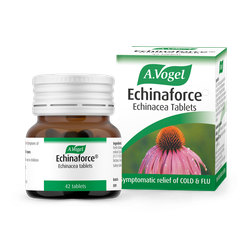
A.Vogel
£6.49
£0.15/1 Tablet
How much echinacea is safe to take?
There isn’t one set dose of echinacea that works for everyone, as it really depends on which type of plant is used (echinacea purpurea, angustifolia or pallida), which part of the plant is used (root or aerial parts) and how it’s prepared (such as tea, capsules or liquid extract).1 Due to these differences, there’s no single recommended dosage and products can vary quite a lot, so make sure to check the product label.
Who shouldn’t take echinacea?
There are some main groups of people that are advised to take extra caution or avoid echinacea altogether, including:
- children under 12 years old7
- pregnant and breastfeeding women7
- people with an immune system disorder (e.g., autoimmune disease)1
Heeral says, "While Echinacea appears to be safe for most healthy adults, it’s always best to check with your doctor before taking any new supplements or products."
What are the side effects of taking echinacea?
Like all medicines, this product can cause side effects, although not everybody gets them. However, one common and possible side-effect is an allergic reaction, which if you already suffer from allergies you’re more likely to get.6 Allergic reactions may include:
- skin rash
- red, itchy skin (hives)
- swelling of the skin due to fluid or swelling of the face
- blistering of the skin
- difficulty breathing
The final say
Echinacea offers a fascinating bridge between centuries-old herbal tradition and modern scientific research. Heeral adds, "It's important to look after your overall nutrition and lifestyle for normal immune function too. For example, sleep is crucial for immune defence.8 Why not try creating a mindful evening routine, avoid screens before bed, light a candle and pop the kettle on for a cup of tea."
Disclaimer – This article provides informational advice and is not a substitute for medical care. Working with experts for accuracy, we take great care to ensure the information is up-to-date and relevant. However, you should always consult your GP or healthcare professional before using supplements or alternative products, particularly if you have medical conditions or are under supervision.
1. Barrett J, Brown R. “Echinacea for the prevention and treatment of upper respiratory tract infections: A systematic review.” Complementary Therapies in Medicine. 2018; 39: 121-129.National Center for Complementary and Integrative Health. Echinacea [Internet]. NCCIH. 2020. Available from: https://www.nccih.nih.gov/health/echinacea
2. Karsch-Völk M, Barrett B, Kiefer D, Bauer R, Ardjomand-Woelkart K, Linde K. “Echinacea for preventing and treating the common cold.” Cochrane Database of Systematic Reviews. (2014).
3. Ahmadi F, et al. “Phytochemistry, Mechanisms, and Preclinical Studies of Echinacea Extracts.” Antibiotics. 2024; 13(10): 947.
4. Weishaupt R, et al. “Safety and dose-dependent effects of Echinacea for acute cold episodes in children.” Children. 2020; 7(12): 292.
5. Schapowal A, Klein P, Johnston SL. Echinacea Reduces the Risk of Recurrent Respiratory Tract Infections and Complications: A Meta-Analysis of Randomized Controlled Trials. Advances in Therapy [Internet]. 2015 Mar;32(3):187–200. Available from: https://link.springer.com/article/10.1007%2Fs12325-015-0194-4
6. Shah SA, Sander S, White CM, Rinaldi M, Coleman CI. Evaluation of echinacea for the prevention and treatment of the common cold: a meta-analysis. The Lancet Infectious diseases [Internet]. 2007;7(7):473–80. Available from: https://www.ncbi.nlm.nih.gov/pubmed/17597571/
7. Echinacea - Special Subjects [Internet]. MSD Manual Professional Edition. Available from: https://www.msdmanuals.com/professional/special-subjects/dietary-supplements/echinacea
8. Besedovsky L, Lange T, Born J. Sleep and immune function. Pflügers Archiv - European Journal of Physiology [Internet]. 2011 Nov 10;463(1):121–37. Available from: https://www.ncbi.nlm.nih.gov/pmc/articles/PMC3256323/
Related to this article