20% off £40 or 15% off £30
Magnesium for muscle cramps: what the science says

Written byAnnabel Francis

Reviewed byLaura Jennings

Muscle cramps can strike at any time – but does magnesium actually help, or is there more to the story? Here’s what the science really says
Summary
1Does magnesium help muscle cramps?
Magnesium supports normal muscle function, but current evidence shows it’s unlikely to be a complete solution on its own.
2What causes muscle cramps?
Cramps are usually caused by a mix of factors like dehydration, fatigue and electrolyte imbalances.
3When might magnesium be useful?
Magnesium may be more useful if your intake is low or your needs are higher, such as during pregnancy or regular exercise.
Muscle cramps can come on suddenly – whether it’s during a workout, in the middle of the night or after a long day on your feet. They can be painful, frustrating and often hard to predict. So, it’s no surprise that many people turn to magnesium for muscle cramps. But how much can it really help – and when might it be worth considering?
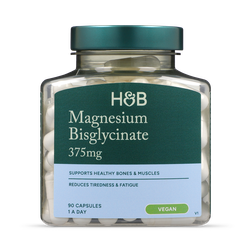
Holland & Barrett
£19.29
£0.21/1 Capsule
What are muscle cramps?
Muscle cramps are sudden, involuntary contractions of a muscle, often affecting the calves, feet or thighs.1,2 They can last anywhere from a few seconds to several minutes, and the muscle may feel sore even after the cramp has passed.3
What causes muscle cramps?
Muscle cramps rarely have just one cause – they’re usually the result of a combination of factors that affect how muscles contract and relax.
Common triggers include:4-7
- dehydration
- electrolyte imbalances
- muscle fatigue
- heat exposure
- pregnancy
- age-related changes
Is magnesium good for muscle cramps?
Magnesium plays an important role in normal muscle function, including how muscles contract and relax.8,9 As registered associate nutritionist Laura Jennings explains, “It also contributes to electrolyte balance and normal nervous system function”.9 Because of this, magnesium is often considered when looking for ways to support leg cramps and general muscle discomfort.10
That said, the evidence isn’t clear-cut. Some studies suggest magnesium may be linked to small improvements in muscle cramps in certain groups – particularly during pregnancy – but overall findings are inconsistent.11,12 Larger reviews in the general population have also found little evidence of a meaningful benefit.10 “It’s important to note that muscle cramps are often multifactorial, meaning magnesium alone is unlikely to be a complete solution,” explains Jennings.1,10
Therefore, although magnesium contributes to normal muscle function (including how they contract and relax), cramps are often caused by multiple factors, so magnesium alone is unlikely to fully resolve them.
Exercise, heat and muscle cramps
Cramps are especially common during exercise, particularly in hot conditions.13 When you’re active, you lose fluids and electrolytes through sweat and changes in fluid balance can affect how muscles and nerves function – potentially increasing the likelihood of cramping.13 At the same time, muscles can become fatigued and nerve signalling less coordinated, which can also play a role.13
While dehydration and electrolyte imbalances have traditionally been linked to cramps, current evidence suggests they are multifactorial, with muscle fatigue playing a key role.1,10 “This helps explain why magnesium and cramps are often discussed together in active individuals, as magnesium contributes to normal muscle function and electrolyte balance,” says Jennings.9 But taking a broader approach – including hydration, recovery and overall nutrition – is just as important.13
When might magnesium be more helpful?
Magnesium may be more helpful in certain situations, particularly if you:
- have a low magnesium intake: low magnesium intake has been associated with symptoms like fatigue and muscle weakness, which may contribute to cramping8,14
- have higher requirements: people who exercise regularly or train in hot environments may have increased magnesium needs13,17
- need support with electrolyte balance: magnesium works alongside other electrolytes like sodium and potassium, which are also important for normal muscle function2,13,15
Which magnesium is best for muscle cramps?
Magnesium supplements come in a range of forms, which mainly differ in how they’re tolerated and used.15 Jennings explains that “Magnesium forms can differ in their absorption and bioavailability, with factors such as solubility, formulation and dose all influencing how effectively magnesium is utilised”.
- Magnesium glycinate – often chosen for its good tolerance and suitability for everyday use15
- Magnesium citrate – commonly used in products aimed at supporting digestive regularity15
- Magnesium oxide – can provide a higher amount of elemental magnesium but may be less well tolerated15
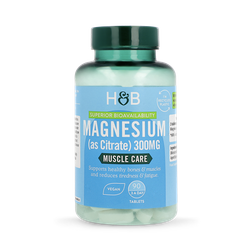
Holland & Barrett
£9.19
£0.10/1 Tablet
How to take magnesium for cramps
Magnesium is naturally found in foods as part of a balanced diet, but it can also be taken as a supplement if needed. Magnesium-rich foods include leafy green vegetables, nuts, seeds and wholegrains, says Jennings.8
UK guidance suggests around 300mg per day for men and 270mg per day for women.16 However, individual needs may vary depending on diet, lifestyle and health status.
Magnesium and muscle cramps FAQs
Magnesium hasn’t been consistently shown to be effective for leg cramps. While some studies report small improvements – particularly in pregnancy – larger reviews suggest it’s unlikely to have a significant effect in the general population.
Current evidence doesn’t show a consistent or immediate effect on muscle cramps, and any benefits, where seen, are generally modest.
Magnesium supports normal muscle function, which is important for overall muscle health, although evidence specifically for muscle aches is limited.
The final say
If you’re dealing with regular cramps, it’s completely understandable to look for solutions like magnesium. Magnesium plays an important role in muscle function and electrolyte balance, and getting enough is key for overall health. But because cramps are rarely caused by a single factor, magnesium alone isn’t likely to be the full answer. Taking a broader approach – including hydration, recovery and balanced nutrition – can help you better support your muscles day to day.
It’s important to see a GP if leg cramps are disturbing your sleep, you have numbness or swelling in your leg or cramps that last longer than 10 minutes.18
Want to dig a little deeper? Discover more about joint pain: causes and symptoms or find out how protein and fitness support muscles and movement.
Disclaimer – This article provides informational advice and is not a substitute for medical care. Working with experts for accuracy, we take great care to ensure the information is up-to-date and relevant. However, you should always consult your GP or healthcare professional before using supplements or alternative products, particularly if you have medical conditions or are under supervision.
1. Minetto, Marco Alessandro1 ; Holobar, Aleš; Botter, Alberto ; Farina, Dario . Origin and Development of Muscle Cramps. Exercise and Sport Sciences Reviews 41(1):p 3-10, January 2013. https://journals.lww.com/acsmessr/abstract/2013/01000/origin_and_development_of_muscle_cramps.3. aspx
2. Bordoni B, Goldin J, Sugumar K. Muscle cramps. In: StatPearls [Internet]. Treasure Island (FL): StatPearls Publishing; 2026. Updated September 14, 2025. https://www.ncbi.nlm.nih.gov/books/NBK499895/
3. Maughan RJ, Shirreffs SM. Muscle Cramping During Exercise: Causes, Solutions, and Questions Remaining. Sports Med. 2019 Dec;49(Suppl 2):115-124. https://pubmed.ncbi.nlm.nih.gov/31696455/
4. Schwellnus MP. Muscle cramping in the marathon : aetiology and risk factors. Sports Med. 2007;37(4-5):364- 7. https://pubmed.ncbi.nlm.nih.gov/17465609/
5. Zhou K, West HM, Zhang J, Xu L, Li W. Interventions for leg cramps in pregnancy. Cochrane Database Syst Rev. 2015 Aug 11;(8):CD010655. doi: 10.1002/14651858.CD010655.pub2. Update in: Cochrane Database Syst Rev. 2020 Dec 4;12:CD010655. https://pubmed.ncbi.nlm.nih.gov/26262909/
6. Rabbitt L, Mulkerrin EC, O’Keeffe ST. A review of nocturnal leg cramps in older people. Age Ageing. 2016;45(6):776-782. https://academic.oup.com/ageing/article/45/6/776/2499229
7. Butler JV, Mulkerrin EC, O'Keeffe ST. Nocturnal leg cramps in older people. Postgrad Med J. 2002 Oct;78(924):596-8. https://pubmed.ncbi.nlm.nih.gov/12415081/
8. Fatima G, Dzupina A, B Alhmadi H, Magomedova A, Siddiqui Z, Mehdi A, Hadi N. Magnesium Matters: A Comprehensive Review of Its Vital Role in Health and Diseases. Cureus. 2024 Oct 13;16(10):e71392. https://pmc.ncbi.nlm.nih.gov/articles/PMC11557730/
9. Fiorentini D, Cappadone C, Farruggia G, Prata C. Magnesium: Biochemistry, Nutrition, Detection, and Social Impact of Diseases Linked to Its Deficiency. Nutrients. 2021; 13(4):1136. https://www.mdpi.com/2072-6643/13/4/1136
10. Moretti A. What is the role of magnesium for skeletal muscle cramps? A Cochrane Review summary with commentary. J Musculoskelet Neuronal Interact. 2021 Mar 1;21(1):1- 3. https://pmc.ncbi.nlm.nih.gov/articles/PMC8020016/
11. Sebo P, Cerutti B, Haller DM. Effect of magnesium therapy on nocturnal leg cramps: a systematic review of randomized controlled trials with meta-analysis using simulations. Fam Pract. 2014;31(1):7-19. https://pubmed.ncbi.nlm.nih.gov/24280947/
12. Dahle LO, Berg G, Hammar M, Hurtig M, Larsson L. The effect of oral magnesium substitution on pregnancy-induced leg cramps. Am J Obstet Gynecol. 1995 Jul;173(1):175- 80. https://pubmed.ncbi.nlm.nih.gov/7631676/
13. Miller KC, McDermott BP, Yeargin SW, Fiol A, Schwellnus MP. An Evidence-Based Review of the Pathophysiology, Treatment, and Prevention of Exercise-Associated Muscle Cramps. J Athl Train. 2022 Jan 1;57(1):5-15. https://pmc.ncbi.nlm.nih.gov/articles/PMC8775277/
14. Pickering G, Mazur A, Trousselard M, Bienkowski P, Yaltsewa N, Amessou M, Noah L, Pouteau E. Magnesium Status and Stress: The Vicious Circle Concept Revisited. Nutrients. 2020 Nov 28;12(12):3672. https://pmc.ncbi.nlm.nih.gov/articles/PMC7761127/
15. Cepeda V, Ródenas-Munar M, García S, Bouzas C, Tur JA. Unlocking the Power of Magnesium: A Systematic Review and Meta-Analysis Regarding Its Role in Oxidative Stress and Inflammation. Antioxidants. 2025; 14(6):740. https://www.mdpi.com/2076-3921/14/6/740
16. NHS. Vitamins and minerals – others. NHS website. https://www.nhs.uk/conditions/vitamins-and-minerals/others/
17. Institute of Medicine (US) Committee on Military Nutrition Research. The effect of exercise and heat on mineral metabolism and requirements. In: Marriott BM, ed. Nutritional Needs in Hot Environments: Applications for Military Personnel in Field Operations. Washington (DC): National Academies Press (US); 1993. https://www.ncbi.nlm.nih.gov/books/NBK236242/
18. NHS Choices. Leg cramps [Internet]. NHS. 2020. Available from: https://www.nhs.uk/conditions/leg-cramps/
Related to this article