20% off £40 or 15% off £30
From low to glow: how to feel better on Blue Monday

Written byH&B editorial team

Reviewed byJade Mitchell

It’s time to redefine the ‘most depressing day of the year’ and turn it into one you can enjoy (yes, really)
Summary
1Why you might feel low in January
Although the exact mechanisms aren’t known for sure, it may be due to a dip in natural serotonin (the ‘feel-good’ hormone)...
2How to feel more positive on Blue Monday
You’re allowed to feel how you feel, but try not to let it consume your day. Take this moment to check in with yourself...
3Small ways to help beat the blues
Keep a list of activities that make you feel good. When you’re in a fog, it might be useful to have these on hand...
The holidays are over, the weather’s grey and your New Year's resolutions already feel old – no wonder some people hate Blue Monday. But here’s the thing: the so-called 'gloomiest day of the year' is just a myth and with a little help you can blast right past it. Let's find out how.
Is Blue Monday a particularly low day?
Blue Monday is the third Monday in January, which means you’ve almost made it through the first month of the new year. For many people this is a good thing – especially if you’re counting down the days 'til the end of winter – but for others it can feel like a slog.
However, it’s important to note that this day was originally based on a campaign to help sell holidays and therefore doesn’t have any scientific basis to affect your mood.4
Why you might feel low in January
It’s not just your mind that feels the weight of winter – your body can too, with some people experiencing sluggishness or low mood as daylight hours decrease. Although the exact mechanisms aren’t known for sure, it may be due to a dip in natural serotonin (the 'feel-good' hormone), while melatonin (the sleep hormone) may increase.1 Add colder weather, heavier meals and disrupted routines and it’s no wonder energy can drop this time of year.
For women, hormonal changes can make this dip feel even stronger – particularly around perimenopause, when mood and sleep may be more sensitive to changes.2 Focusing on small, supportive habits like morning light exposure, maintaining a healthy diet,gentle movement and time outdoors may be just what you need this January.3
How to feel more positive on Blue Monday
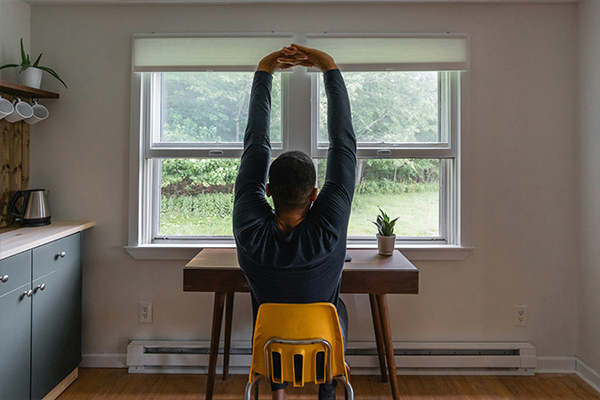
Even if you accept that Blue Monday's a myth, you can start to feel a bit 'blue' just from everyone talking about it. Remember, you’re allowed to feel how you feel, but try not to let it consume your day. Take this moment to check in with your loved ones or implement a few of the feel-good habits below...
Small ways to help beat the blues
- Keep a list of activities that make you feel good. You could even make a 'dopamine menu', where you list self-care moments in different-sized 'courses'. Make your menu as simple as you like or get crafty
- Consider ‘habit stacking’ if your usual routines feel more difficult. This involves adding a new behaviour you want to adopt onto a current habit – think doing your skincare at the gym or taking your vitamins with breakfast
- Have a go at positive affirmations. You don’t need to go straight in at the deep end – just a small reminder of your potential could help set your mornings up for success. Experiment with different approaches until you find one that feels right. Need a starting point? Try “I speak to myself like a friend”, “I strive for progress, not perfection” or “I celebrate my uniqueness”
- Keep moving, no matter how gently. It’s one we hear all the time, but it really does help if you’re struggling with your mood.4 See how you can tailor your exercise routine to your menstrual cycle too
- Add small acts of kindness into your day. Studies show we feel better after doing good deeds, and chances are that your friends or even strangers could do with a mood lift 5,6
- Take a leaf out of the Scandis’ book. With only a handful of daylight hours in winter, every scrap adds up. We spoke to three Swedish and Danish people about keeping their spirits up in winter – their routines included mastering the morning routine, making use of SAD lamps, getting moving with friends and more
- Learn when to rest and when to push through – sometimes, it’s best to listen to your body when motivation is low
- Make your downtime count. It's thought that people need different kinds of rest based on their personality type, so consider a different approach if you struggle to relax
Blue Monday FAQs
In 2026, Blue Monday falls on 19 January. But it’s important to know the concept of Blue Monday is actually a myth. It was coined in 2004 by a travel company to promote their winter deals.4
The formula for this PR stunt was based on what they believed was most likely to contribute to low mood during this time of year. That included things like the weather, debt, comedown from Christmas, motivational levels and more.
While some of those factors might have you feeling down, there’s no science behind Blue Monday – it's just another day. Use Blue Monday as an opportunity to recharge your body and mind at home. Why not use this day to find glimmers of positivity, work on your breathing or focus on meditation?
The final say
It’s understandable to feel a little 'blah' around this time of year. But if your mood’s getting in the way of daily life or you’ve felt down for more than two weeks, speak to your GP.
Want something to focus on this Blue Monday? Learn our tips to help avoid burnout or wind down when the day is done with these caffeine-free bedtime teas.
Disclaimer – This article provides informational advice and is not a substitute for medical care. Working with experts for accuracy, we take great care to ensure the information is up-to-date and relevant. However, you should always consult your GP or healthcare professional before using supplements or alternative products, particularly if you have medical conditions or are under supervision.
1. NHS. Seasonal affective disorder (SAD) [Internet]. NHS [reviewed 2025 Dec 17; cited 2025 Dec 23]. Available from: https://www.nhs.uk/mental-health/conditions/seasonal-affective-disorder-sad/overview/
2. NHS. Symptoms – Menopause [Internet]. NHS [reviewed 2022 May 17; cited 2025 Dec 23]. Available from: https://www.nhs.uk/conditions/menopause/symptoms/
3. NHS. Exercise for depression [Internet]. NHS [reviewed 2022 Sep 7; cited 2025 Dec 23]. Available from: https://www.nhs.uk/mental-health/self-help/guides-tools-and-activities/exercise-for-depression/
4. Mental Health Foundation. What does Blue Monday mean for our mental health? [Internet]. Mental Health Foundation [reviewed 2021 Jan 6; cited 2025 Dec 23]. Available from: https://www.mentalhealth.org.uk/explore-mental-health/blogs/what-does-blue-monday-mean-our-mental-health
5. University of Sussex. The Kindness Test [Internet]. University of Sussex [cited 2024 Oct 28]. Available from: https://www.sussex.ac.uk/research/centres/kindness/research/thekindnesstest
6. Hui BPH, Ng JCK, Berzaghi E, Cunningham-Amos LA, Kogan A. Rewards of Kindness? A Meta-Analysis of the Link Between Prosociality and Well-Being. American Psychological Association [Internet]. 2020 [cited 2024 Oct 28]. Available from: https://www.apa.org/pubs/journals/releases/bul-bul0000298.pdf