Probiotics for women: how can good bacteria support your wellness?

Written byHeeral Tomlinson

Reviewed byLaura Jennings
Probiotics are everywhere – but what can they really do for women’s health? We unpack the latest science and ask an expert for the insights you actually need
Summary
1What are probiotics?
Probiotics are live bacteria (sometimes called ‘friendly’ bacteria) that are thought to have health benefits. They occur naturally in some fermented..
2Potential benefits of friendly bacteria
Emerging research highlights that friendly bacteria may benefit women in these following key areas: UTIs, vaginal health, exercise recovery...
3How does it support vaginal health?
A balanced microbiome, dominated by Lactobacillus species, helps maintain an acidic pH and supports natural lubrication...
Probiotics have taken the wellness industry by storm in recent years. But what are they, how do they work and what are the benefits of these friendly bacteria for women? “Probiotics aren’t a one-size-fits-all solution – the key is matching the strain to the concern,” says registered associate nutritionist Laura Jennings. With her expert insight, we explore how these friendly bacteria work and the potential ways they may support women’s health.
What are probiotics?
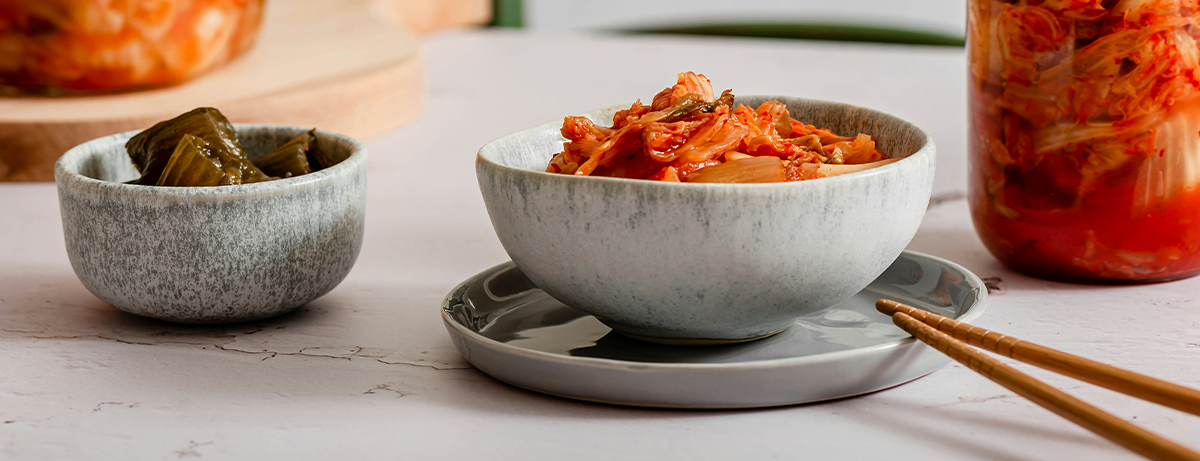
Probiotics are live bacteria (sometimes called ‘friendly’ bacteria) that are thought to have health benefits.1 They occur naturally in some fermented foods such as yogurt, kimchi and kombucha, but can also be added to unfermented foods such as juices, milk and even infant formulas.2,3 In fact, you can even get these good bacteria in supplements, a rapidly growing market with research exploring their potential benefits increasing every year.4
Not all probiotics are created equal, however. Two products might list the same type of bacteria but the strain is what really makes the difference. For example, Lactobacillus rhamnosus GG (often written as LGG) has been studied for supporting immune health, while another strain from the same species may not have those effects at all.5
That’s why you’ll often see a code or number after the probiotic name like NCFM. It tells you which specific strain you’re getting and what it’s been shown to do. For example, Lactobacillus acidophilus NCFM has emerging evidence for gut health based on a good-quality human study.6,7,8
“It’s worth checking the label of the products you’re buying to ensure you’re getting the right strain with the benefits you’re looking for,” says Laura. So, what are the potential benefits of these friendly bacteria and how might they support women's health or other areas of your wellness?
6 potential benefits of friendly bacteria for women
So, where might these friendly bacteria make a difference? Emerging research highlights the below key areas.

1. UTIs
2. Vaginal health
3. Exercise recovery
4. Immunity
5. Gut health
6. Weight management
1. UTIs
Urinary tract infections (UTIs) are incredibly common and for some women, frustratingly recurrent.6 Researchers are looking at how friendly bacteria may support those who get frequent UTI infections while potentially avoiding the adverse effects of antibiotic use.9
One of the key theories is that certain strains of Lactobacillus help maintain a healthy balance of bacteria in the vagina, making it harder for harmful bacteria such as E. coli to take hold in the urinary tract.10
“The number of lactobacilli living in the vagina naturally declines, particularly in menopause,” explains Laura.6 “Supporting these populations through targeted friendly bacteria may help create an environment that’s less favourable for the bad bacteria that trigger UTIs. However, further research with larger sample sizes is needed to confirm and determine the optimal ingredients and dosages.”9
“Although research is still evolving, early studies suggest strains like Lactobacillus rhamnosus GR-1 and Lactobacillus reuteri RC-14 might be helpful for UTIs when used consistently.11 You should speak to a healthcare professional if you think you have a UTI and always check with your doctor first before trying any new supplements,” says Laura.
“Vaginal health is often overlooked, but the microbiome here is incredibly sensitive”
2. Vaginal health
The vaginal microbiome plays a big role in overall gynaecological health. A balanced microbiome, dominated by Lactobacillus species, helps maintain an acidic pH and supports natural lubrication.12
“Vaginal health is often overlooked, but the microbiome here is incredibly sensitive,” says Laura. “Things like stress, sex, antibiotics or even glucose levels can disrupt this balance. Friendly bacteria may help restore an optimal environment according to early research.”13
3. Exercise recovery
While friendly bacteria are usually associated with digestion, they may also support women who exercise regularly, particularly those who do high-intensity exercise.14 A healthy gut environment can influence inflammation, energy production and even how efficiently your body repairs muscle tissue.15 Some research suggests certain strains may reduce exercise-induced inflammation and support immune function during intense training periods.14
“For active women, supporting recovery isn’t just about protein and sleep,” Laura notes. “Your gut plays a role in regulating inflammation, absorbing nutrients and even producing some of the metabolites involved in energy. Friendly bacteria may indirectly contribute to recovery and support the intestinal barrier.”15 Early studies have explored bacteria, such as, Lactobacillus and Bifidobacteria for these benefits, though more research is needed.15
“Your gut and immune system are constantly talking to each other”
4. Immunity
Around 70% of the immune system lives in the gut, so it’s no surprise that friendly bacteria may help support immune function.16 Multiple studies have demonstrated that friendly bacteria are associated with a lower incidence of respiratory infections and antibiotic use. The rationale for using probiotics to support the body’s natural defence mechanisms is based on their ability to modify the microbiome, supporting the growth of beneficial bacteria over the growth of unfavourable bacteria.16
“Your gut and immune system are constantly talking to each other,” Laura explains. “If your beneficial bacteria are thriving and your microbiome is nice and diverse, it can support a more resilient immune response. This is especially helpful during stressful periods, travel or seasonal changes.”
5. Gut health
Probiotics are perhaps best known for their role in supporting the digestive system.17 “Women often come to me with symptoms like bloating or bowel issues,” says Laura. “While probiotics aren’t a one-size-fits-all approach, the key is matching the strain to the concern.”
And here’s where it gets fun: prebiotics and probiotics may only be one letter apart, but they play totally different roles. Probiotics are the friendly bacteria themselves, while prebiotics are the fibre that feeds them – think of them as the fertiliser that helps your gut garden grow.
Probiotics also work best when paired with prebiotics, fibres that feed the good bacteria. Prebiotics are found in specific fibrous foods like bananas, oats, onions and garlic.17
6. Weight management
The relationship between gut bacteria and weight is an active area of research. People with obesity or who are overweight have been shown to have lower microbial diversity in the gut compared to people with normal weight. Research in humans is still ongoing but it’s clear the microbiome could be important for maintaining energy balance.18
“While friendly bacteria won’t magically cause weight loss, certain strains may support metabolic health indirectly by influencing appetite-regulating hormones, inflammation and how the body stores fat,” explains Laura.18 Some early research points to Lactobacillus gasseri and Lactobacillus plantarum for the potential to support weight loss in overweight populations, but further research is needed.18
FAQs
Not necessarily. Many people can maintain a healthy microbiome through diet and lifestyle, especially with fibre-rich foods, fermented foods, managing stress levels, reducing alcohol and minimal intake of ultra-processed foods.
“Probiotics may be helpful in specific situations,” says Laura. “For example, during periods of high stress, gut issues or when supporting vaginal health. But they’re not essential for everyone and you should always check with a healthcare professional first if they’re suitable for you.”
Always look for:
- the specific strain (e.g. LGG, GR-1)
- the research behind it
- the health benefit it’s been studied for
- whether the product provides an evidence-based dose
“It’s not just about the highest CFU count,” Laura explains. “You need the one with the right strain for what you’re looking to support.”
Absolutely, fermented foods include beneficial bacteria:
“These foods offer additional nutrients like B vitamins and antioxidants,” says Laura.
The final say
Probiotics – or “friendly bacteria” – are quickly becoming wellness favourites and emerging research shows they may help keep things running smoothly throughout the body. While some benefits are still being explored, choosing the right strain and using it consistently may offer meaningful support for many everyday concerns women face.
And remember, probiotics are powerful, but they love a little backup. “They work best alongside a gut-friendly lifestyle, which includes plenty of fibre, hydration, movement, good sleep and stress management,” Laura concludes.
If you’re curious to learn more about how the body stays in balance, you can read on with our guides to the gut–brain axis and what your pee can reveal about your health.
Disclaimer – This article provides informational advice and is not a substitute for medical care. Working with experts for accuracy, we take great care to ensure the information is up-to-date and relevant. However, you should always consult your GP or healthcare professional before using supplements or alternative products, particularly if you have medical conditions or are under supervision.
1. https://www.nhswebsite. Probiotics [Internet]. nhs.uk. 2017. Available from: https://www.nhs.uk/tests-and-treatments/probiotics/
2. National Institutes of Health. Probiotics [Internet]. Nih.gov. 2023. Available from: https://ods.od.nih.gov/factsheets/Probiotics-HealthProfessional/
3. Selvaraj S, Gurumurthy K. An overview of probiotic health booster-kombucha tea. Chinese Herbal Medicines. 2022 Dec;15(1).
4. Day RL, Harper AJ, Woods RM, Davies OG, Heaney LM. Probiotics: current landscape and future horizons. Future Science OA. 2019 Apr;5(4):FSO391.
5. Liu Y, Chen Y, Liao H, Sun S, Zhang X, Xie L, et al. Research progress on the application of Lacticaseibacillus rhamnosus GG in pediatric respiratory diseases. Frontiers in Nutrition. 2025 Feb 21;12.
6. Sadrin S, Sennoune S, Gout B, Marque S, Moreau J, Zinoune K, et al. A 2-strain mixture of Lactobacillus acidophilus in the treatment of irritable bowel syndrome: A placebo-controlled randomized clinical trial. Digestive and Liver Disease. 2020 May;52(5):534–40.
7. Magro DO, de Oliveira LMR, Bernasconi I, Ruela M de S, Credidio L, Barcelos IK, et al. Effect of yogurt containing polydextrose, Lactobacillus acidophilus NCFM and Bifidobacterium lactis HN019: a randomized, double-blind, controlled study in chronic constipation. Nutrition Journal [Internet]. 2014 Jul 24;13:75. Available from: https://www.ncbi.nlm.nih.gov/pmc/articles/PMC4113128/
8. Lyra A, Hillilä M, Huttunen T, Männikkö S, Taalikka M, Tennilä J, et al. Irritable bowel syndrome symptom severity improves equally with probiotic and placebo. World Journal of Gastroenterology [Internet]. 2016 Dec 28;22(48):10631–42. Available from: https://www.ncbi.nlm.nih.gov/pmc/articles/PMC5192275/
9. Aggarwal N, Leslie SW. Recurrent urinary tract infections [Internet]. PubMed. Treasure Island (FL): StatPearls Publishing; 2025. Available from: https://www.ncbi.nlm.nih.gov/books/NBK557479/
10. Carvalho FM, Mergulhão FJM, Gomes LC. Using Lactobacilli to Fight Escherichia coli and Staphylococcus aureus Biofilms on Urinary Tract Devices. Antibiotics [Internet]. 2021 Dec 14;10(12):1525. Available from: https://www.ncbi.nlm.nih.gov/pmc/articles/PMC8698619/
11. Darouiche RO, Hull RA. Bacterial Interference for Prevention of Urinary Tract Infection. Clin Infect Dis [Internet]. 2012 Nov 15;55(10):1400–7. Available from: https://academic.oup.com/cid/article-abstract/55/10/1400/321516?redirectedFrom=fulltext
12. Álvarez-Arraño V, Martín-Peláez S. Effects of Probiotics and Synbiotics on Weight Loss in Subjects with Overweight or Obesity: A Systematic Review [Internet]. Nutrients. 2021;13(10):3627. Available from: https://pmc.ncbi.nlm.nih.gov/articles/PMC8540110/
13. Wiertsema SP, van Bergenhenegouwen J, Garssen J, Knippels LMJ. The Interplay between the Gut Microbiome and the Immune System in the Context of Infectious Diseases throughout Life and the Role of Nutrition in Optimizing Treatment Strategies [Internet]. Nutrients. 2021 Mar 9;13(3):886. Available from: https://pmc.ncbi.nlm.nih.gov/articles/PMC8001875/
14. Aykut MN, Erdoğan EN, Çelik MN, Gürbüz M. An Updated View of the Effect of Probiotic Supplement on Sports Performance: A Detailed Review [Internet]. J Evid Based Health Stud. 2024;13(2):251–63. Available from: https://pmc.ncbi.nlm.nih.gov/articles/PMC11133216/
15. Zhang L, Wang Y, Sun Y, Zhang X. Elucidating the role of diet in maintaining gut health to reduce the risk of obesity, cardiovascular and other age-related inflammatory diseases: recent challenges and future recommendations [Internet]. Available from: https://pmc.ncbi.nlm.nih.gov/articles/PMC10773664/
16. Zafar K, Azuama OC, Parveen N. Current and emerging approaches for eliminating Borrelia burgdorferi and alleviating persistent Lyme disease symptoms. Front Microbiol [Internet]. 2024;15:1459202. Available from: https://www.frontiersin.org/journals/microbiology/articles/10.3389/fmicb.2024.1487641/full
17. Use of probiotic lactobacilli in the treatment of vaginal infections. Eur PMC [Internet]. Available from: https://pmc.ncbi.nlm.nih.gov/articles/PMC10106725/
18. Dubé-Zinatelli E, Cappelletti L, Ismail N. Vaginal Microbiome: Environmental, Biological, and Racial Influences on Gynecological Health Across the Lifespan. Am J Reprod Immunol [Internet]. 2024;92(6):e70026. Available from: https://pmc.ncbi.nlm.nih.gov/articles/PMC11640209/