If you have endometriosis, it can be hard to tell where your symptoms end and menopause begins. We’ve spoken to our expert to discuss how lifestyle can support you and when to speak to your doctor
Summary
1Endometriosis and menopause: what's the link?
Endometriosis is influenced by the hormone oestrogen, so symptoms often change during perimenopause as hormone levels fluctuate.
2Managing menopause symptoms with endometriosis
Regular exercise, a balanced diet and supporting your mental wellbeing can help improve your quality of life during menopause.
3Can you have endometriosis after menopause?
Endometriosis after menopause is uncommon, but it can happen, affecting an estimated 2–4% of people with a history of the condition.
Living with endometriosis can mean years of pelvic pain, heavy periods and uncertainty about your future fertility. As you get older, another question may start to crop up: are your symptoms still endometriosis or could they be menopause? The answer isn't always straightforward. The symptoms of endometriosis and menopause can overlap, making it difficult to know which is causing changes – the best way to be sure is to speak to your GP.
Understanding how the two are connected can help you recognise changes in your body and get the right support – which is why we’ve spoken to our registered associate nutritionist and science team member, Olivia Rosenvinge.
What's the link between endometriosis and menopause?
Endometriosis is a condition where tissue similar to the lining of the womb grows outside the uterus.1 These growths respond to the hormone oestrogen, which is why symptoms often change throughout the menstrual cycle.2 During perimenopause, your body's hormone levels begin to fluctuate. These hormonal changes may affect endometriosis symptoms, with some people noticing changes in symptom severity or patterns during perimenopause.3 After menopause, oestrogen levels fall significantly, which may lead to an improvement in symptoms for many people. However, everyone's experience is different.
Endometriosis and perimenopause symptoms
One of the biggest challenges is that endometriosis and menopause symptoms can look very similar. If you've always had painful periods or discomfort during sex, these symptoms alone may not tell you whether perimenopause has started. Instead, you might notice that your usual symptoms become more unpredictable or flare up as hormone levels rise and fall during perimenopause.3
Keeping track of your symptoms over time can help you and your healthcare professional identify patterns and decide on the best treatment options. Alongside your existing endometriosis symptoms, you may also begin to notice more typical menopause symptoms, such as:4
- hot flushes
- night sweats
- mood changes
- sleep problems
- vaginal dryness
- changes to your periods (if you're still having them)
However, many of these symptoms are non-specific and can be associated with a range of other conditions. Rather than self-diagnosing, it's important to speak to a healthcare professional if you're trying to identify the cause of your symptoms.

Managing menopause symptoms with endometriosis
Living with both endometriosis and menopause can feel overwhelming, but there are lots of ways to manage your symptoms and support your wellbeing.
"Regular movement, good nutrition and looking after your mental wellbeing can all play an important role"
Lifestyle support
“Lifestyle changes won't treat the underlying endometriosis, but regular movement, good nutrition and looking after your mental wellbeing can all play an important role in supporting your overall health and quality of life during menopause,” says Olivia. Looking after your overall health is just as important during menopause. Regular movement can help support your heart, bones and mood.5,6,7
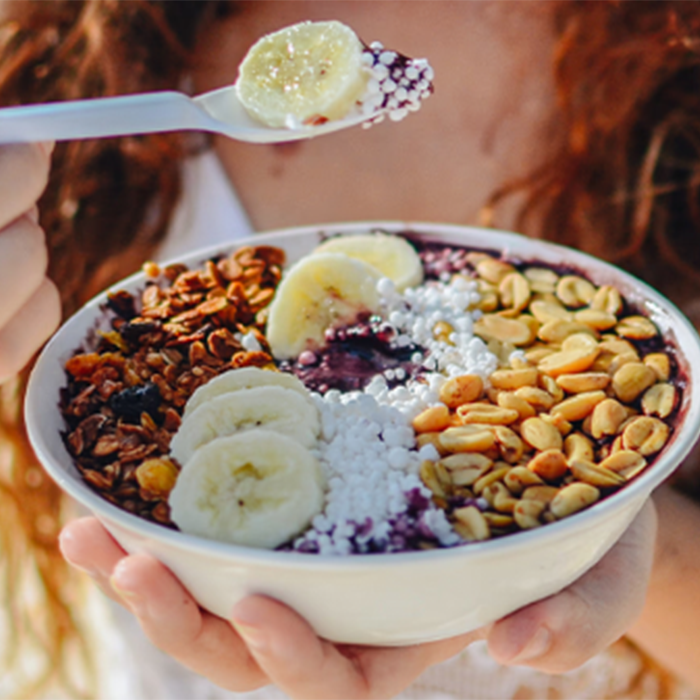
If endometriosis makes exercise uncomfortable, choose activities that feel manageable on the day rather than pushing through pain – you could also try working with a PT or physiotherapist. Eating a balanced diet, including plenty of fruit, vegetables, protein and wholegrain carbohydrates, can also support your health during menopause.5,6,7 If you're concerned about weight changes or nutrition, your GP or a registered dietitian can offer personalised advice.
Emotional wellbeing
Living with a long-term condition while going through menopause can take a toll on your mental health. Some people find that talking therapies such as cognitive behavioural therapy (CBT) help them manage anxiety, low mood and the emotional impact of changing symptoms.8 It can also help to learn more about what to expect and connect with trusted sources of information and support. Speaking openly with your GP about your symptoms, future plans and treatment options can help you feel more prepared and confident.
Useful topics to discuss include:
Medical support
Your GP or menopause specialist can help you build a treatment plan that's tailored to your symptoms and medical history. This may include discussing HRT, non-hormonal treatments or reviewing any medication you're already taking for endometriosis. If you're experiencing ongoing pelvic pain, bladder symptoms or pelvic floor problems, your GP may also refer you to a specialist physiotherapist.
Can you have endometriosis after menopause?
Endometriosis after menopause is uncommon, but it can happen, affecting an estimated 2–4% of people with a history of the condition.9,10 “Many people expect endometriosis symptoms to disappear after menopause, but that's not always the case,” says Olivia. “While symptoms often improve as oestrogen levels fall, everyone's experience is different, which is why ongoing support remains important.” And although your endometriosis symptoms might decrease, you might experience new symptoms specific to menopause, like:11
- mood swings
- hot flushes and night sweats
- vaginal atrophy
If anything changes or concerns you, speak to your GP or specialist so they can investigate the cause.
Endometriosis and menopause FAQs
“Although no single diet has been shown to treat endometriosis, following a balanced Mediterranean-style eating pattern is associated with a range of health benefits and may help support overall health during menopause,” says Olivia. “The focus should be on nourishing your body with plenty of vegetables, wholegrains, healthy fats and protein – while limiting foods high in saturated fat, sugar, salt and alcohol where possible 12 – rather than following restrictive diets.” Some people also find that identifying and reducing foods that trigger bloating or bowel symptoms helps, but what works can vary from person to person.12
Endometriosis affects around one in 10 women and girls of reproductive age worldwide. It can cause symptoms such as painful periods, pelvic pain and difficulty getting pregnant, although symptoms vary from person to person.13 If you think you may have endometriosis, it's important to speak to a healthcare professional for assessment and support.13
For many people, endometriosis symptoms improve after menopause because the body produces less oestrogen, which can reduce the activity of endometriosis.14,15 However, symptoms don’t always go away completely and some people continue to experience pain or other symptoms after menopause.14,15
One study has suggested that people with endometriosis may experience natural menopause slightly earlier than those without the condition, although the difference is generally small and the reasons remain unclear.16
If you're noticing changes that make you wonder whether you're entering perimenopause, don't dismiss them because you think you're too young. Speaking to your GP can help you understand what's happening and whether further assessment is needed.
The final say
Every experience of menopause and endometriosis is different. While many people notice that symptoms improve after menopause, this isn't true for everyone and it's normal to have questions about what lies ahead. The most important thing is that you don't have to navigate it alone. If your symptoms are changing or you're unsure whether you're experiencing menopause, speak to your GP or menopause specialist. With the right information and support, you can find an approach that works for you and feel more confident managing this next stage of life.
After some more info? We’ve rounded up our menopause must-haves and have tucked into the science behind the best diet for endometriosis.
Disclaimer – This article provides informational advice and is not a substitute for medical care. Curated by experts for accuracy, we take great care to ensure the information is up-to-date and relevant. However, you should always consult your GP or healthcare professional before using supplements or alternative products, particularly if you have medical conditions or are under supervision.
1. National Health Service. Endometriosis [Internet]. NHS. 2022 Sept [cited 2026 Aug 3]. Available from: https://www.nhs.uk/conditions/endometriosis/
2. Chantalat E, Valera MC, Vaysse C, Noirrit E, Rusidze M, Weyl A, et al. Estrogen receptors and endometriosis. International Journal of Molecular Sciences [Internet]. 2020 Apr 17 [cited 2026 Aug 3];21(8):2815. Available from: https://www.ncbi.nlm.nih.gov/pmc/articles/PMC7215544/
3. Santoro N. Perimenopause: From Research to Practice. J Womens Health (Larchmt) [Internet]. 2015 Apr 1 [cited 2024 Mar 7]; 25(4): 332-339. Available from: https://www.ncbi.nlm.nih.gov/pmc/articles/PMC4834516/
4. NHS website. Symptoms of menopause and perimenopause [Internet]. nhs.uk. 2026 May [cited 2026 Aug 3]. Available from: https://www.nhs.uk/conditions/menopause-and-perimenopause/symptoms/
5. NHS. Things you can do – Menopause [Internet]. NHS; [reviewed 2022 May 17; cited 2024 Mar 7]. Available from: https://www.nhs.uk/conditions/menopause/things-you-can-do/
6. NHS. Physical activity guidelines for older adults [Internet]. NHS; [reviewed 2021 Sep 24; cited 2024 Mar 7]. Available from: https://www.nhs.uk/live-well/exercise/physical-activity-guidelines-older-adults/
7. British Heart Foundation. Menopause and your heart [Internet]. British Heart Foundation [cited 2024 Mar 7]. Available from: https://www.bhf.org.uk/informationsupport/support/women-with-a-heart-condition/menopause-and-heart-disease
8. NHS. Overview – Cognitive behavioural therapy (CBT) [Internet]. NHS [reviewed 2022 Mar 14; cited 2024 Mar 7]. Available from: https://www.nhs.uk/mental-health/talking-therapies-medicine-treatments/talking-therapies-and-counselling/cognitive-behavioural-therapy-cbt/overview/
9. Dinu MD, Bashar Haj Hamoud, Mihaela Amza, Gorecki GP, Sima RM, Nicolae Gică, et al. Endometriosis in Menopausal Women—A New Age Is Coming? Literature Review. Life [Internet]. 2024 Apr 9 [cited 2026 Aug 3];14(4):485–5. Available from: https://www.ncbi.nlm.nih.gov/pmc/articles/PMC11051166/
10. Jakson I, Lindén Hirschberg A, Gidlöf SB. Endometriosis and menopause – management strategies based on clinical scenarios. AOGS [Internet]. 2023 Apr 26 [cited 2024 Mar 7]; 102(10): 1323-1328. Available from: https://obgyn.onlinelibrary.wiley.com/doi/full/10.1111/aogs.14583
11. Secosan C, Balulescu L, Brasoveanu S, Balint O, Pirtea P, Dorin G, Pirtea L. Endometriosis in Menopause – Renewed Attention on a Controversial Disease. Diagnostics (Basel) [Internet]. 2020 Mar [cited 2024 Mar 7]; 10(3): 134. Available from: https://www.ncbi.nlm.nih.gov/pmc/articles/PMC7151055/
12. DIET AND COMPLEMENTARY THERAPIES FOR ENDOMETRIOSIS. In [cited 2026 Aug 3]. Available from: https://www.endometriosis-uk.org/sites/default/files/2025-11/Endometriosis-CompTherapy-16pp-v4.pdf
13. World Health Organization. Endometriosis [Internet]. World Health Organization. World Health Organization; 2023 [cited 2026 Aug 3]. Available from: https://www.who.int/news-room/fact-sheets/detail/endometriosis
14. Jo’s Hot Topics: Endometriosis and Menopause | Endometriosis UK [Internet]. Endometriosis-uk.org. 2025 Oct [cited 2026 Aug 3]. Available from: https://www.endometriosis-uk.org/jos-hot-topics-endometriosis-and-menopause
15. Secosan C, Balulescu L, Brasoveanu S, Balint O, Pirtea P, Dorin G, et al. Endometriosis in Menopause—Renewed Attention on a Controversial Disease. Diagnostics. 2020 Feb 29;10(3):134.
16. Chung HF, Hayashi K, Dobson AJ, Sandin S, Ideno Y, Hardy R, et al. Association between endometriosis and type and age of menopause: a pooled analysis of 279 948 women from five cohort studies. Human Reproduction [Internet]. 2025 Apr 30 [cited 2026 Aug 3];. Available from: https://doi.org/10.1093/humrep/deaf068