20% off £40 or 15% off £30


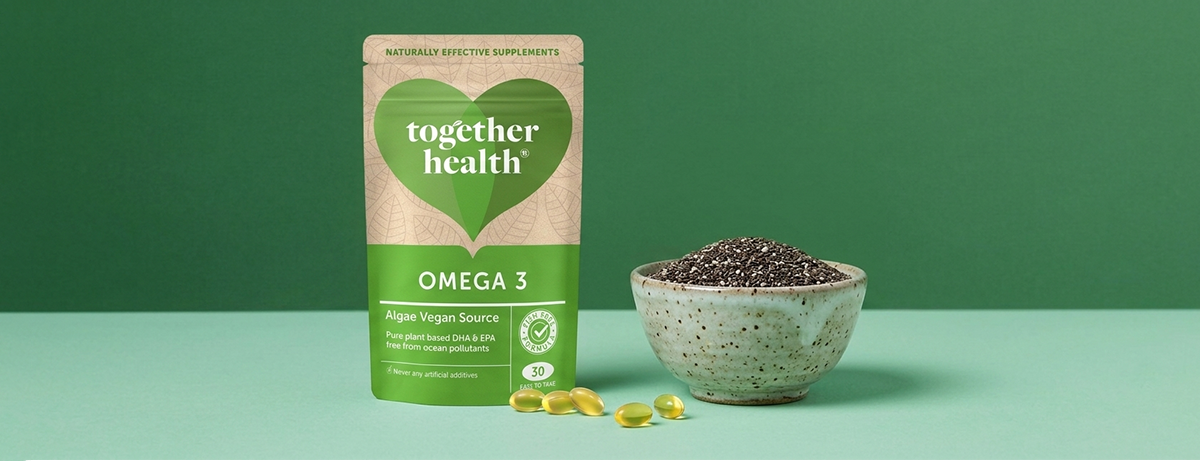
Think omega-3 = fish? Think again. There are plenty of plant-based ways to get your fix. Let's discover the vegan sources you need to know about
Our top picks
DHA to maintain normal vision
Together Health
Together Natural Algae DHA Omega 3 30 Softgels
Save up to 1/2 Price
£12.29
£14.99
Supports heart health
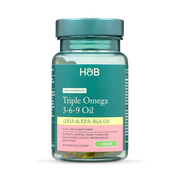
Holland & Barrett
Holland & Barrett High Strength Vegan Triple Omega 3-6-9 Oil 680mg 30 Capsules
3 For 2 Mix & Match
£15.69
Helps maintain normal skin structure
Pharma Nord
Pharma Nord Omega 7 Sea Buckthorn Oil 60 Capsules
3 For 2 Mix & Match
£21.49
Omega-3 fatty acids are essential for our health, with the most common source coming from fish oils. But what are your options when you’re vegan or vegetarian and don’t eat fish? Omega-3 plays a big role in a wide range of bodily functions – they’re called essential fatty acids for a reason. If you’re veggie, vegan or you simply don’t eat oily fish, it’s important to know where you can find your best vegan omega-3 sources...
What is omega-3?
Omega-3 fatty acids are a group of ‘healthy’ fats that help keep our heart, brain and eyes healthy.1 They're essential for our health, but our bodies can’t make them – so we have to get plenty in our diet. There are three main types of omega-3s:1,2,3
- alpha-linolenic acid (ALA): this is the type best known for helping to support cholesterol levels. It’s found mainly in plant oils, plus flaxseeds, soybeans, walnuts and chia seeds
- eicosapentanoic acid (EPA): important for the heart (supporting normal blood pressure and blood lipids). EPA is found mainly in oily fish and other seafood
- docosahexaenoic acid (DHA): important for the development and maintenance of normal vision and brain function, plus supports heart function. DHA is also found mainly in oily fish, but microalgae is a plant-based alternative that provides DHA and EPA without the fishy taste
Plant vs animal omega-3s
You can get omega-3 fats from both plant and animal sources. ALA is particularly easy to get in your diet if you’re vegan, as it’s mostly found in nuts, seeds and certain plant oils.1 EPA and DHA can be more difficult to get from your diet if you don’t eat fish, though. The body can convert ALA into small amounts of DHA and EPA, but this process isn’t very efficient.1 As a result, the easiest way to get vegan DHA and EPA is through a supplement – usually algal oil. Algae is how fish get their omega-3 in the first place.4
Plant foods such as walnuts, chia seeds, flaxseeds and hemp seeds provide ALA omega-3, which contributes to overall omega-3 intake. Algae-based supplements offer a vegan source of EPA and DHA.
Are vegans usually deficient in omega-3s?
On the whole, vegetarians and vegans can get a good intake of omega-3s (especially ALA) by including nuts, seeds or vegetable oil in their diet.3 But they may be less likely to have adequate EPA and DHA without other options such as taking a supplement.
Best vegan omega-3 food sources
Want some inspiration on getting plant omega-3s into your diet? Sprinkling, blending or baking – you've got plenty of options:
- flaxseeds and flaxseed oil: sprinkle flaxseeds over yoghurt, blend into smoothies or use flaxseed oil in salad dressings. PS: flaxseeds are also called linseeds – they're the same thing
- chia seeds: enjoy a chia pudding, add chia seeds to bakes or make a ‘chia egg’ for vegan baking
- walnuts: great for snacking – add walnuts to a trail mix or stir into salads for added crunch
- edamame (soy beans): keep a bag in the freezer and throw into Asian-style salads and rice bowls (or snack with a sprinkle of salt)
- kidney beans: a staple for chillies, curries and stews
- Brussels sprouts: they’re not just for Sunday dinners. Shred in salads, roast for extra texture or turn into a slaw
Our top vegan omega-3 supplements
Think a vegan omega-3 supplement might be for you? Choose from our top picks, including tablets, capsules and ‘superfood’ blends...
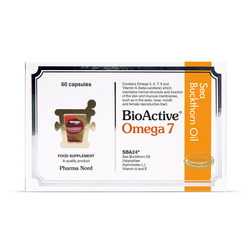
Pharma Nord
£21.49
£0.36/1 Capsule
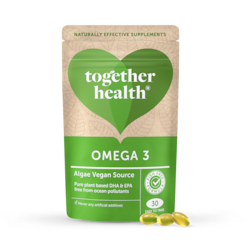
Together Health
£14.99
£12.29
£0.41/1 Capsule
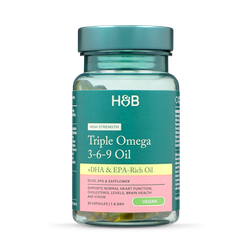
Holland & Barrett
£15.69
£0.52/1 Capsule
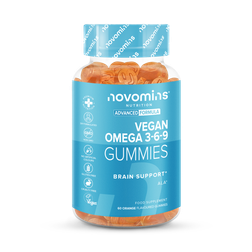
Novomins
£19.99
£0.33/1 Chewable
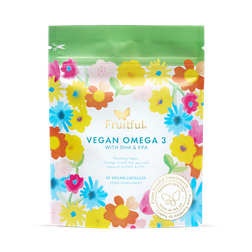
Fruitful Vitamins
£15.99
£0.53/1 Unit
Vegan omega-3 FAQs
It’s possible for vegans to get omega-3s from their diet. However, if you're not consuming a wide range of plant-based omega-3 foods, you may find taking a supplement useful.
Vegans and vegetarians can get omega-3s by eating nuts (particularly walnuts), chia seeds, flaxseeds, beans (especially kidney beans) and vegetable oils.
Fruits aren’t generally a good source of omega-3s. But you can upgrade your fruit salad or fruit-topped yoghurt bowl with a handful of omega-rich nuts and seeds.
Algal oil, made from microalgae, is a good vegan substitute for omega-3 supplements. Look for chlorella or spirulina too – you can find these in powders to add to smoothies.
The final say
Omega-3s are essential in so many ways, particularly for eye, brain and heart health. Depending on your diet, you may be able to get all the omega-3 you need from food – but if you're finding it difficult, a vegan omega-3 supplement might be for you. Ready for more? Check out our guide to plant-based protein or learn about keeping your heart healthy...
Disclaimer – This article provides informational advice and is not a substitute for medical care. Working with experts for accuracy, we take great care to ensure the information is up-to-date and relevant. However, you should always consult your GP or healthcare professional before using supplements or alternative products, particularly if you have medical conditions or are under supervision.
1. National Institutes of Health (NIH). Omega-3 Fatty Acids – Fact Sheet for Health Professionals [Internet]. NIH [reviewed 2025 Aug 22; cited 2026 Jun 11]. Available from: https://ods.od.nih.gov/factsheets/Omega3FattyAcids-HealthProfessional/
2. The Association of UK Dietitians (BDA). Omega-3 [Internet]. BDA [reviewed 2024 Apr; cited 2026 Jun 11]. Available from: https://www.bda.uk.com/resource/omega-3.html
3. NHS. The vegan diet [Internet]. NHS [reviewed 2026 Jun 5; cited 2026 Jun 11]. Available from: https://www.nhs.uk/live-well/eat-well/how-to-eat-a-balanced-diet/the-vegan-diet/
4. Bailey E et al. Comparative Bioavailability of DHA and EPA from Microalgal and Fish Oil in Adults. Int J Mol Sci [Internet]. 2025 Sep 24 [cited 2026 Jun 11]; 26(19): 9343. Available from: https://pmc.ncbi.nlm.nih.gov/articles/PMC12524788/
Related to this article