On a mission for smoother skin as you age? Here's a beginner's guide using retinol in your twenties, thirties and beyond
Summary
1What is retinol?
This vitamin A derivative encourages collagen production, protects existing collagen and helps to maintain your skin’s elasticity.
2When should I start using retinol?
Wondering if it's too late to begin? Or maybe too early? Learn the best ages to start retinol and why.
3Using retinol: common mistakes to avoid
Retinol's potency is a double-edged sword: it could be your skin's new love, but only when used carefully.
There are enough things to navigate in your early adult life. What’s that button in my car? That bill’s due today? Introducing retinol might not be first on your list – but perhaps you’ve caught yourself analysing the mirror a few too many times.
If you want your skin to age healthily and look smooth and firm for as long as possible, this is where retinol might come in. But when's best to start? Is it ever too late? Here's how to start using retinol in your twenties, thirties and beyond...
What is retinol?
This vitamin A derivative encourages collagen production, protects existing collagen and helps to maintain your skin’s elasticity.1 As it speeds up your skin’s natural cell turnover, it may also help with blemishes and uneven pigmentation.1 Retinol also plays a role in thickening the epidermis (the outermost layer of skin) and protecting against photoaging, premature skin ageing because of sun damage or tanning beds.2,3,4 It's a pretty versatile skincare ingredient and you'll find it in products ranging from creams to serums, oils and moisturisers – just pick what best suits you.
When should I start using retinol?
Wondering if it's too late to begin? Or maybe too early? Learn the best ages to start retinol and why...
Using retinol in your teens
While retinol products aren't generally unsuitable for teenagers, most teens are unlikely to benefit from using them as they're usually intended to address signs of skin ageing. Your skin already produces plenty of collagen and you won't see significant changes in your skin firmness or elasticity for quite a few years. Plus, retinol is a potent ingredient and it can easily irritate delicate skin.1,5 Your doctor might suggest a course of retinoids like tretinoin or adapalene for more severe or painful breakouts, but these are only available on prescription and mustn't be used otherwise.6
So, save your skincare funds for products that focus on hydration rather than ageing well – moisturisers and gentle cleansers like niacinamide or salicylic acid may be used alongside a daily SPF.
Using retinol in your early twenties
If you’re one of the lucky ones, your teenage blemishes might have subsided and you’re still reaping the benefits of collagen production. From your mid-20s, collagen production gradually begins to slow. However, your skin is still likely to be firm and healthy, and visible signs of ageing such as sagging and wrinkles are usually minimal.
Both breakouts and fine lines are very normal at this time, so don’t feel you’re out of place in your skin journey.6 As with any age, SPF is your number one priority – daily use of SPF helps protect your skin from UV damage, which can contribute to the development of fine lines and wrinkles over time.7
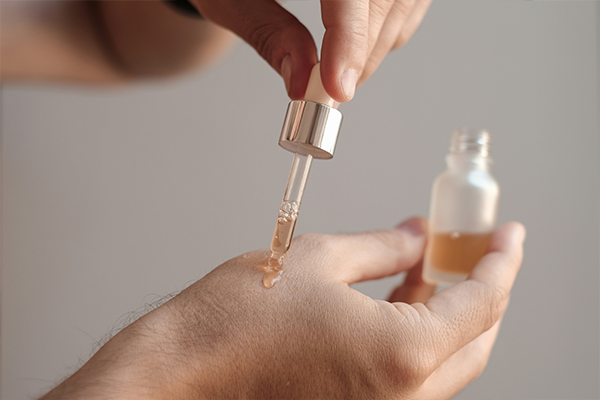
You don't need to wait until you notice blemishes or visible signs of skin ageing to establish a skincare routine that supports healthy-looking skin. Daily sun protection is the most important step, and if you choose to introduce retinol, start with a lower-strength product and build up gradually as your skin adjusts.
It's important to know that you shouldn't use retinol skincare or take retinol supplements if you're pregnant or trying to conceive, as they increase the risk of certain birth defects.8 So if these are on the cards any time soon, hold off on using retinol for now.
Using retinol in your late twenties
You’ve passed your 'collagen peak' and somehow your social media ads just know. Hands up if you're ready to block the word 'anti-ageing'. It’s true that collagen production gradually begins to slow down in early adulthood,9 but it’s not about 'anti' anything – you’re at the perfect time to establish a healthy ageing routine that works for you.
This is a good time to start using retinol. Think of your twenties as the ideal time to build a simple routine that supports healthy-looking skin for the future. But as we mentioned above, you mustn’t use retinol products or take retinol supplements if you’re pregnant or trying to conceive.8
Using retinol in your thirties and beyond
Just like your late twenties, this is another great time to introduce retinol into your skincare routine. You might be seeing the first signs of ageing, so it’s an ideal time to form habits that will set you up for life.
Using retinol a few times a week – supported by a daily cleanser, moisturiser and SPF – may help keep you looking and feeling youthful. Remember that retinol's very potent, so experts suggest applying no more than a pea-sized amount every time. It should go without saying to use a sunscreen with at least SPF 30 every day, all year round.10 This is always crucial but it’s particularly important if you’re using retinol as it may leave your skin more susceptible to UV rays.11 Apply your retinol at night to avoid direct sunlight afterwards.
Using retinol: common mistakes to avoid
Retinol's potency is a double-edged sword: it could be your skin's new love, but only when used carefully. Overusing retinol could lead to skin dryness, irritation and redness. So, here's what to do (and what not to do) when you start using retinol...
- apply retinol at night, as it may increase your skin’s sensitivity to the sun11
- start slow: you might want to try retinol once a week, then work your way up to two or three times depending on how your skin reacts
- don’t skip your sunscreen, even if it’s not hot or sunny outside
Retinol FAQs
You can start using retinol at any age past your early twenties. Using it beforehand isn't likely to have any preventative effects on skin ageing and may irritate delicate young skin. Many people find that the best time to start using retinol is in their mid to late twenties, as this is when collagen production has begun to decrease and skin begins to show the first signs of ageing.5
It depends on your skin type, as retinol is a potent ingredient. Some people find it best to start two or three times per week and work up slowly, anywhere up to once per day. Slow down if your skin feels dry, itchy or irritated or looks red or flaky. Always carry out a patch test before use.
By your forties your skin may be showing more visible signs of ageing, such as fine lines, wrinkles and a loss of firmness. Retinol can help improve the appearance of these signs by supporting skin cell turnover and helping skin look smoother and more even-toned. With continued use, it may also help improve the appearance of skin and texture. While retinol can't reverse the natural ageing process, it can be a useful addition to your skin routine.
The final say
Early adulthood can feel like an endless reel of skin changes. Anything from our hormones to medications, our favourite tipple or stress levels can have an effect. Luckily, good health looks great at any age and it's never too late to give retinol a go. Start with the basics in our guide to using retinol safely or shop our top retinol creams for your eyes, face and body...
Disclaimer – This article provides informational advice and is not a substitute for medical care. Working with experts for accuracy, we take great care to ensure the information is up-to-date and relevant. However, you should always consult your GP or healthcare professional before using supplements or alternative products, particularly if you have medical conditions or are under supervision.
1. Zasada M, Budzisz E. Retinoids: active molecules influencing skin structure formation in cosmetic and dermatological treatments. Postepy Dermatol Alergol [Internet]. 2019 Aug 30 [cited 2026 Jul 28]; 36(4): 392-7. Available from: https://pmc.ncbi.nlm.nih.gov/articles/PMC6791161/
2. Kong R et al. A comparative study of the effects of retinol and retinoic acid on histological, molecular, and clinical properties of human skin. Cosmet Dermatol [Internet]. 2015 Nov 18 [cited 2026 Jul 28]; 15(1): 49-57. Available from: https://onlinelibrary.wiley.com/doi/full/10.1111/jocd.12193
3. Zhong J, Zhao N, Song Q, Du Z, Shu P. Topical retinoids: Novel derivatives, nano lipid-based carriers, and combinations to improve chemical instability and skin irritation. Cosmet Dermatol [Internet]. 2024 Jul 1 [cited 2026 Jul 28]; 23(10): 3102-15. Available from: https://onlinelibrary.wiley.com/doi/10.1111/jocd.16415
4. ScienceDirect. Photoaging – Chapters and Articles [Internet]. ScienceDirect [cited 2026 Jul 28]. Available from: https://www.sciencedirect.com/topics/medicine-and-dentistry/photoaging
5. Reilly DM, Lozano J. Skin collagen through the lifestages: importance for skin health and beauty. Plastic and Aesthetic Research. 2021 Jan 8;8(2).
6. NHS. Acne [Internet]. NHS [reviewed 2023 Jan 3; cited 2026 Jul 28]. Available from: https://www.nhs.uk/conditions/acne/treatment/
7. Hughes MCB, Williams GM, Baker P, Green AC. Sunscreen and prevention of skin aging: a randomized trial. Ann Intern Med [Internet]. 2013 Jun 4 [cited 2026 Jul 28]; 158(11): 781-90. Available from: https://pubmed.ncbi.nlm.nih.gov/23732711/
8. Putra IB, Jusuf NK, Dewi NK. Skin Changes and Safety Profile of Topical Products During Pregnancy. J Clin Aesthet Dermatol [Internet]. 2022 Feb [cited 2026 Jul 28]; 15(2): 49-57. Available from: https://pmc.ncbi.nlm.nih.gov/articles/PMC8884185/
9. Skin Cancer Foundation. Sunscreen & Your Skin [Internet]. Skin Cancer Foundation [reviewed 2026 Jun; cited 2026 Jul 28]. Available from: https://www.skincancer.org/skin-cancer-prevention/sun-protection/sunscreen/
10. National Institute for Health and Care Excellence (NICE). Topical retinoids [Internet]. NICE [reviewed 2026 Feb; cited 2026 Jul 28]. Available from: https://cks.nice.org.uk/topics/acne-vulgaris/prescribing-information/topical-retinoids/
Related to this article